

Ant Control & Ant Exterminator Services for Your Home
What You Need to Know
Need to get rid of ants? Read on to learn the answers to all of your important questions. Need help? Call our professionals today to get started.
Schedule Today!
What are the options for ant control?
Effective ant control usually combines several methods rather than relying on one.
Ant baits are placed along active trails and around the perimeter, where foraging ants carry them back and share them with the colony.
Liquid treatments are applied to entry points and travel routes, transferring between ants as they pass through.
Ant control dusts reach cracks, wall voids, and crawl spaces that other applications can’t.
Exclusion work, sealing gaps and correcting moisture issues, helps reduce the conditions that drew ants in to begin with.
Most common types of ants found in homes
Four species account for the majority of residential ant problems across the country.

Odorous House Ants
Small, dark ants that give off a sharp smell when crushed. They nest outdoors but move indoors through tiny gaps, drawn by moisture and accessible food.
Carpenter Ants
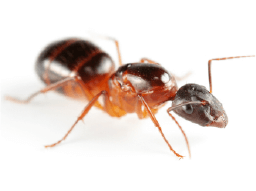
Large black or reddish ants that tunnel through damp or damaged wood to nest. They don’t eat wood, but their galleries can weaken structural material over time.
Fire Ants
Reddish ants that build loose mound nests in open ground and swarm aggressively when disturbed. Their stings are painful, which makes professional removal the safer option.
Crazy ants
Fast, erratic-moving ants that form very large colonies with multiple queens. Their size and spread make them difficult to control without a targeted treatment plan.
How to identify if you have an ant infestation
A few reliable signs point to an established colony rather than a stray ant or two:
- Steady trails of ants moving in the same direction, especially along baseboards, countertops, or exterior walls.
- Small mounds of loose soil near foundations, sidewalks, or patio joints.
- Piles of fine wood shavings or sawdust-like debris beneath windowsills and door frames.
- Ants clustered around sinks, dishwashers, or other reliable moisture sources.
- Faint rustling inside walls, which can indicate carpenter ant activity.
- Winged ants indoors, a sign that a mature colony is producing swarmers.
Ant Control and Prevention: How to Keep Ants from Coming Back
Keeping ants out of your home starts with addressing the conditions that attract them. Ants enter homes looking for food, water, and potential nesting sites, often traveling through small foundation cracks, gaps beneath doors, or openings around utility lines. While treating the visible ants may provide temporary relief, effective ant control also involves identifying the species, locating nests when possible, and reducing opportunities for new ants to enter.
An approach known as integrated pest management (IPM) combines inspection, prevention, monitoring, and targeted treatment. Homeowners can help prevent ant infestations by storing food in sealed containers, cleaning up crumbs and spills, fixing plumbing leaks, and sealing entry points. Outdoors, trimming vegetation away from the home and managing aphids and other honeydew-producing insects can also reduce ant activity near the foundation.
When ants continue returning, professional ant control may be necessary to address hidden nests or larger colonies. Depending on the species and location, treatment may include slow-acting ant baits, bait stations, or targeted applications designed to reach ants beyond those visible inside the home. Combined with ongoing prevention, these methods can provide more lasting control than relying on contact sprays alone.
How Much Does Professional Ant Control Cost?
The cost of professional ant exterminator services varies depending on the ant species, the extent of the infestation, the size of the property, and the treatment required. A small, localized problem may require a different approach than a recurring infestation involving multiple ant nests or carpenter ants nesting inside structural wood.
When comparing ant control services, homeowners should ask whether the estimate includes inspection, interior and exterior treatment where appropriate, and any recommended follow-up visits. A local pest control professional can assess the conditions around your home and provide a treatment recommendation and quote based on the specific ant problem.
What does an ant exterminator do?
A technician starts by inspecting your home inside and out to identify the species, locate the nest, and find how ants are getting in. Species identification matters, because a treatment that works on odorous house ants may do little against carpenter ants.
From there, they apply the appropriate combination of baits, liquids, and dusts to reach the colony. Most visits end with recommendations on sealing entry points and correcting moisture problems, along with a schedule for follow-up treatment.
How Can I Get Rid of Ants in My Home?
If the ants have come to your home, you’ll likely need to call a pest control expert to assist with the removal of ants. Ants can be quite resilient and persistent, so they’re not easy to eradicate from your home using DIY methods. If you’re seeing ants, definitely call a professional. Here are a couple of things you can do in the meantime:
- Get rid of any food or water that’s left out.
- Seal up all food and water sources.
- If ants are traveling in a trail, they leave their scent behind. So take a disinfecting wipe or spray and wipe the area the ants have traveled to make it harder to find their way back.
- Over the counter ant sprays may kill the worker ants you’re seeing but do nothing to target the colony and its queen. This is why you need expert pest control for ants.
When Should I Call Ant Control or an Ant Exterminator?
If ants keep coming back after a week of store-bought sprays, the colony is still active and likely spreading. Talk to pest control experts who can find the nest and treat it directly, before a manageable problem turns into a recurring one.
If you’re currently worried about the ant situation in your home, don’t wait for a full-blown infestation to occur before you take action to protect your home! You may have already started looking for answers and providers by conducting searches for “ant exterminators near me” or “pest control near me.” Let us help you end that search right now.
Call Pest Control Experts today to get a free quote and to schedule your home pest inspection as soon as possible
Ant control (Frequently Asked Questions) FAQs
Here are some commonly-asked questions from homeowners on hiring a professional for ant control.
A: Most ant species are more of a nuisance than a structural threat, contaminating food and stored goods as they forage. Carpenter ants are the exception. They hollow out damp wood in framing, decks, and window frames, and damage can accumulate quietly over several seasons.
A: Most household ants pose little direct risk, though they can carry bacteria across food surfaces. Fire ants are the real concern: their stings cause painful welts and, in people with sting allergies, can trigger a serious reaction requiring immediate medical attention.
A: Ants come indoors looking for food, water, or shelter. Heavy rain, drought, and nearby construction all push colonies to relocate. Once inside, crumbs, pet food, leaking pipes, and unsealed trash give them a reason to stay and keep recruiting.
A: Retail sprays kill the ants you see but rarely reach the nest, and some repellents cause colonies to split and form new ones nearby. Without locating and treating the source, ants typically return within weeks, often in more locations than before.