
Ant Control: What Every Homeowner Needs to Know
Key Takeaways
- Killing the ants you can see solves little, because foraging workers represent only about 1% to 10% of a colony while the queen, eggs, larvae, and nursery workers remain in the nest.
- Over-the-counter contact sprays can make the problem worse through budding, since repellent pyrethroids signal a threat and prompt multi-queen species to split off into additional colonies.
- The three most common household species are odorous house ants, identifiable by a rotten-coconut smell when crushed, pavement ants that nest where concrete meets soil, and carpenter ants that excavate galleries in moist wood.
- Slow-acting, non-repellent baits work because ants share food through trophallaxis, carrying the active ingredient back to the queen and larvae over roughly three to 14 days before the colony collapses.
- Bait selection should follow the season, with ants seeking protein in spring to feed larvae and shifting toward carbohydrates by midsummer.
- An initial spike in ant activity after placing bait is a good sign that foragers are recruiting others, so resist the urge to spray during that window.
- Carpenter ants pose a structural threat, and warning signs include clean fibrous frass pushed from kick-out slits, a cellophane-like rustling inside walls, and winged swarmers indoors in spring.
- Prevention includes trimming vegetation 12 to 18 inches from siding and rooflines, fixing leaks and directing gutter discharge five feet from the foundation, sealing utility penetrations, and wiping counters daily to break pheromone trails.
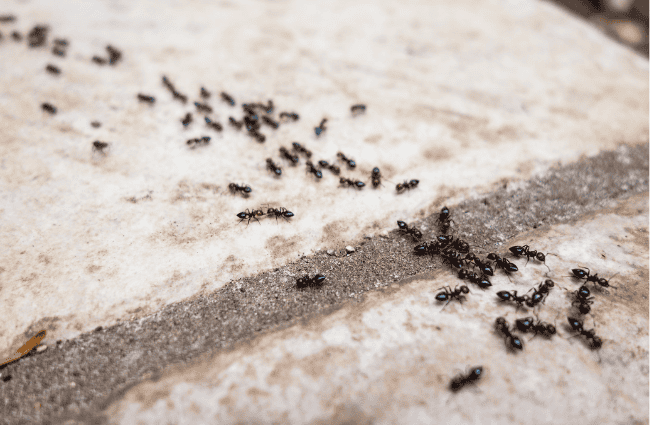
Few things derail a quiet morning faster than stepping into the kitchen and finding a disciplined march of ants trailing across your countertop. The natural reaction is pure defense: grab a spray, blast the invaders, wipe down the surface, and consider the job done.
Unfortunately, that’s not how ant control works.
Killing the foraging workers you can see is like trying to put out a campfire by fanning away the smoke. If you want to eliminate an ant problem — and keep it gone — you need to understand the biology behind the trail, the flaws of quick fixes, and the strategic science of colony elimination.
Common Ant Species in Homes
Effective ant control starts with accurate identification, because a strategy that works for one species can actively backfire when applied to another.
Odorous House Ants
Small (about 1/16 to 1/8 inch), dark brown or black, and the most common kitchen invader on the list. Their defining trait is the smell—crush one and it releases a distinct chemical odor often described as rotten coconut or rancid butter. Odorous house ants form massive, multi-queen colonies and relocate frequently in response to rain, heat, or disturbance. That multi-queen structure is what makes them so difficult to eliminate, and it’s why spraying them is the worst thing you can do.
Carpenter Ants
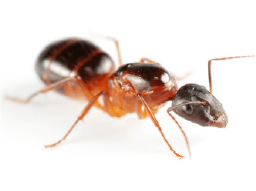
Among the largest ants in North America, ranging from 1/4 to over 1/2 inch long. Typically dark red, black, or dual-toned, they target moist or decaying wood—not to eat it, but to excavate smooth galleries for nesting. Over time, that excavation compromises structural framing, wall studs, window headers, and joists. If termites are the silent destroyers, carpenter ants are the slow renovators you never hired.
Pavement Ants
Small (about 1/8 inch), dark brown to black, with faint parallel grooves on the head and thorax visible under magnification. Pavement ants nest in cracks in driveways, sidewalks, patios, and foundation slabs—anywhere concrete meets soil. They’re less destructive than carpenter ants but persistent invaders of kitchens and bathrooms, foraging for greasy and sweet foods alike. In warmer months, you’ll often spot small mounds of displaced sand or soil pushed up through expansion joints and foundation cracks.
Why DIY Sprays Often Make Things Worse
When homeowners spot ants, the first instinct is to reach for an over-the-counter aerosol. These sprays kill on contact—which feels productive—but they frequently make the broader problem worse through a phenomenon called budding.
Contact sprays contain fast-acting, repellent active ingredients, usually pyrethroids. When applied to a foraging trail, three things happen. First, you kill the foragers — but those workers represent only about 1% to 10% of the total colony. The queen, eggs, larvae, and nursery workers remain safely inside the nest.
Second, the chemical residue creates a repellent barrier that alerts the colony to an active threat. Third—and this is where it gets costly—species like odorous house ants have polygynous colony structures, meaning a single nest houses multiple egg-laying queens. When foragers can’t return to the original nest, they establish a new one. Now you have two colonies. Or three. The spray didn’t solve the problem—it multiplied it.
Why Your House Is an Ant Magnet
Ants don’t invade out of spite. They enter because your home offers exactly what they need: accessible entry points, stable microclimates, moisture, and concentrated food resources.
Entry Points
An ant can pass through openings as thin as a credit card. Common infiltration routes include unsealed utility line penetrations—plumbing pipes, gas lines, electrical conduit—gaps beneath exterior door thresholds, damaged weatherstripping, weep holes in brick veneer foundations, and tree branches or shrubs making direct physical contact with siding or rooflines.
The Foraging Drive
Ant nutritional demands shift with the colony’s reproductive cycle. In spring, colonies prioritize protein to fuel rapid larval growth —grease, pet food, meat scraps, and dead insects are primary targets. By midsummer, the demand shifts to carbohydrates for adult worker energy—spilled juice, honeydew from aphids, syrups, and crumbs.
Fats serve as a high-density energy source year-round, which is why greasy stovetops and unwashed pans are such reliable attractants. And water is critical throughout, especially during hot, dry stretches — leaky pipes, condensation under sinks, and standing water in potted plant saucers draw ants as reliably as any food source.
Baiting Strategies That Actually Work
If repellent sprays cause budding, how do you eliminate a colony? The answer lies in slow-acting baits that exploit the ants’ own biology.
Ants share liquid food among nestmates through a process called trophallaxis — essentially mouth-to-mouth feeding. A slow-acting bait takes advantage of this behavior. A forager consumes the bait, carries it back to the nest, and distributes it to the queen, larvae, and other workers before anyone succumbs to the active ingredient. The colony poisons itself from the inside out.
Match the Bait to the Season
Because ant nutritional preferences change throughout the year, bait selection matters. If ants ignore a liquid sugar bait in early spring, it’s likely because the colony is in a protein-demanding phase—switching to a granular or gel protein-based matrix might yield better results. Midsummer? Sweet liquid baits become far more attractive. Reading the colony’s current demand is the difference between bait that gets carried home and bait that gets walked past.
Use Non-Repellent Active Ingredients
Professional-grade baits use slow-acting, non-repellent toxicants — borates, fipronil, or insect growth regulators — specifically because the ants can’t detect them. The goal is invisibility: the bait needs to look and taste like food, not a threat.
Patience Is Mandatory
When you place bait, you’ll initially see an increase in ant activity. This is a good sign—it means foragers have found it and are recruiting others. Resist the urge to spray. Let them work. Over 3 to 14 days, the bait circulates through the colony via trophallaxis, eventually reaching the queen. Once she dies, the colony collapses.
The Hidden Danger of Carpenter Ants
While odorous house ants and pavement ants are primarily nuisance invaders, carpenter ants pose a genuine structural threat that escalates the longer it goes unaddressed.
As a colony grows over several years, workers expand their galleries along the soft grain of moisture-damaged wood, hollowing out structural framing from the inside. The damage is cumulative and often invisible until it’s severe.
Signs of Carpenter Ant Activity
Frass is the most reliable indicator—fine, fibrous wood shavings resembling pencil-sharpener debris, pushed out through small kick-out slits in walls or trim. Unlike termite frass, carpenter ant frass is clean and free of mud or soil.
Audible rustling from inside a wall—a faint sound similar to crinkling cellophane—indicates a large, active nest behind the drywall.
Winged swarmers indoors during spring signal a mature colony, typically three to five years old, established inside or very near the structure. By the time you see swarmers, the nest has been doing damage for years.
Prevention Checklist
Long-term ant prevention means making your home inhospitable before scouts ever find it.
Trim vegetation so branches, shrubs, and ornamental plants stay at least 12 to 18 inches from rooflines and siding. Direct plant-to-structure contact is a highway for ants.
Manage moisture by fixing leaking hose bibbs, repairing indoor plumbing drips, and ensuring rain gutters discharge water at least five feet from the foundation. Carpenter ants specifically seek out moisture-damaged wood—eliminate the moisture and you eliminate the invitation.
Seal exterior gaps around windows, utility penetrations, and foundation walls using silicone or acrylic caulk. Pay special attention to where pipes and wires enter the structure.
Store food properly in airtight glass or thick plastic containers—cereals, baking ingredients, and pet food are common targets.
Break the trail by wiping down kitchen surfaces daily with soap and water. This disrupts pheromone trails that guide other foragers to the food source.
When to Call a Professional
A few ants trailing across the kitchen counter doesn’t always signal an infestation—but recurring trails, visible frass, structural damage, or colonies that keep bouncing back after treatment usually mean the problem runs deeper than what’s visible. Multi-queen species like odorous house ants and wood-destroying species like carpenter ants are especially difficult to resolve without professional-grade tools and targeted application methods.
A professional pest control service, like Pest Control Experts, can identify the exact species, inspect reasonably accessible areas of your property for nesting sites and entry points, and recommend a treatment approach that works with ant biology—not against it.
Pest Control Experts connect homeowners with trusted local professionals—including Terminix and Aptive—who specialize in species-specific ant control, from targeted baiting programs to structural exclusion. Contact Pest Control Experts for a free quote and schedule your home inspection today.