
Earwigs vs Silverfish: What Are the Differences?
Key Takeaways
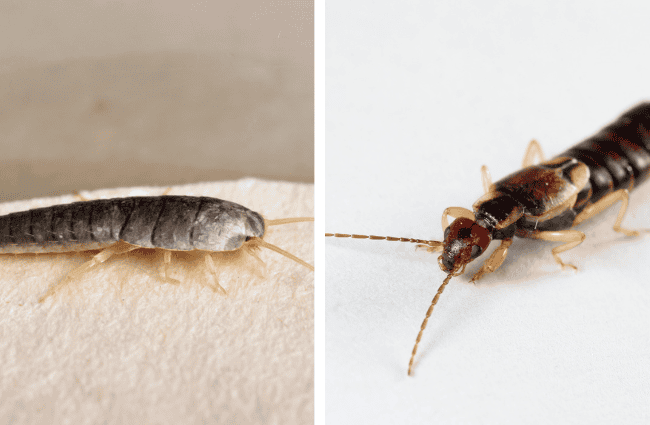
- Earwigs and silverfish are both nocturnal pests, but they are easy to tell apart once you know what to look for. Earwigs have brown bodies and noticeable rear pincers, while silverfish have silvery, teardrop-shaped bodies with three long tail-like appendages.
- Earwigs are usually outdoor pests that may enter homes when looking for moisture, shelter, or cooler conditions. They are commonly found around mulch, garden debris, stones, logs, basements, bathrooms, and other damp areas.
- Silverfish are more likely to become indoor pests because they thrive in humid, dark, undisturbed spaces such as bathrooms, basements, attics, closets, kitchens, and storage areas.
- Neither pest is considered dangerous to people or pets. Earwigs may pinch if handled, but they do not spread disease. Silverfish do not bite or sting, but they can trigger concerns for people with allergies or asthma due to shed skins and scales.
- Silverfish usually pose a greater risk to household belongings. They feed on starches and carbohydrates found in paper, books, wallpaper paste, cardboard, stored foods, fabrics, and other household materials.
- Prevention for both pests starts with moisture control. Reducing humidity, fixing leaks, improving ventilation, sealing cracks, and removing clutter or outdoor harborage areas can help make your home less attractive to earwigs and silverfish.
- Persistent pest activity may require professional help. A pest control professional can correctly identify whether you are dealing with earwigs, silverfish, or another crawling insect and recommend a targeted treatment plan.
If you’ve spotted small, quick-moving insects scurrying away when you turn on the lights or move objects in your home, you might be dealing with either earwigs or silverfish. While both of these insects can be unwelcome guests in your home, they have distinct characteristics, behaviors, and potential impacts. Understanding the differences between these common household pests can help you identify what you’re dealing with and determine the most effective approach to manage them.
What are earwigs?
Earwigs are nocturnal insects belonging to the order Dermaptera, with about 2,000 species worldwide. These common garden pests get their name from an old European superstition that they crawl into people’s ears while sleeping—a myth with no scientific basis. Earwigs are primarily outdoor insects that prefer dark, damp environments like mulch, garden debris, and underneath stones or logs.
They’re omnivorous scavengers that feed on decaying plant material, other insects, and occasionally living plants. While earwigs can enter homes seeking moisture during dry conditions or shelter during cold weather, they don’t typically establish permanent indoor infestations. Despite their somewhat frightening appearance, earwigs are generally harmless to humans and can actually be beneficial in gardens by feeding on aphids and other plant pests.
What are silverfish?
Silverfish are primitive, wingless insects from the order Zygentoma, believed to have existed for over 400 million years, making them one of the oldest insect orders still alive today. Unlike earwigs, silverfish are primarily indoor pests that thrive in dark, humid environments like bathrooms, basements, attics, and kitchens. They’re nocturnal creatures that stay hidden during daylight hours, emerging at night to feed on carbohydrates and proteins found in many household items.
Their diet includes paper, glue, book bindings, wallpaper, clothing starch, food crumbs, and even dead insects. Silverfish can live remarkably long lives—up to 8 years in ideal conditions—and can survive weeks without food. Unlike many household pests, silverfish are solitary insects rather than colony-forming, though finding multiple silverfish indicates favorable conditions exist in your home.
What do earwigs look like?
Earwigs have a distinctive appearance that makes them easy to identify. These insects typically measure between ¼ to 1 inch long with elongated, flattened bodies ranging in color from light reddish-brown to black. Their most recognizable feature is the pair of large, curved, pincer-like appendages (called cerci) at the rear of their abdomen. These pincers appear more curved in males and straighter in females, and are used for defense, capturing prey, and during mating.
Most earwig species have two pairs of wings—short, leathery forewings that protect a second pair of semicircular, fan-shaped hindwings—though they rarely fly. They also have long antennae, approximately half their body length, and three pairs of legs. With their segmented bodies and forceps-like appendages, earwigs have a somewhat intimidating appearance despite being relatively harmless to humans.
What do silverfish look like?
Silverfish have a distinctive, primitive appearance that makes them relatively easy to identify. They’re small insects, typically measuring between ½ to ¾ inch long with tear-drop shaped, flattened bodies covered in silvery-gray scales that give them a metallic sheen. As their name suggests, their movement resembles a fish swimming, with a wiggling motion created by their three long, bristle-like appendages extending from their posterior—two cerci and one median caudal filament.
Silverfish also have two long antennae projecting from their head and lack wings entirely throughout their lifecycle. Their body tapers from head to tail, and they have three pairs of legs. When disturbed, silverfish can move extremely quickly, often disappearing into cracks and crevices before they can be properly observed. Their distinctive scales can sometimes leave tiny, pepper-like deposits in areas where they frequently travel.
What are some main differences between earwigs and silverfish?
Earwigs and silverfish differ significantly in several key aspects. Physically, earwigs are distinguished by their prominent rear pincers and typically brownish bodies, while silverfish have a silvery, metallic appearance with three long, bristle-like tail appendages.
Their habitat preferences also differ—earwigs are primarily outdoor insects that occasionally venture indoors, preferring garden environments with decaying organic matter, while silverfish are true indoor pests that thrive in humid, undisturbed areas of homes. Diet represents another distinction: earwigs are omnivores that consume both plant material and small insects, while silverfish primarily feed on carbohydrates like paper, wallpaper paste, and book bindings.
Additionally, earwigs can fly short distances despite rarely doing so, whereas silverfish are completely wingless. Their lifecycles also differ significantly, with earwigs displaying unusual maternal care for insects, while silverfish undergo gradual development throughout their remarkably long lifespan.
What are more dangerous: earwigs or silverfish?
Neither earwigs nor silverfish pose significant health risks to humans. Contrary to old myths, earwigs don’t crawl into people’s ears to lay eggs or bore into their brains. While earwigs can pinch if handled, their pincers rarely break skin or cause more than momentary discomfort. They don’t carry diseases that affect humans or pets. Similarly, silverfish don’t bite, sting, or transmit diseases.
However, when comparing property damage potential, silverfish present the greater concern. Their diet of starches and carbohydrates means they can damage books, photographs, wallpaper, clothing, and stored foods if left unchecked. Earwigs rarely cause property damage indoors, though they may occasionally feed on houseplants.
For individuals with asthma or allergies, silverfish can be problematic as their shed skins and scales can trigger reactions. Overall, while neither insect poses serious danger, silverfish typically cause more persistent household problems.
Lifecycle of an earwig
Earwigs undergo incomplete metamorphosis with three distinct life stages: egg, nymph, and adult. Their lifecycle begins when females lay batches of 20-50 small, oval, pearly-white eggs in shallow soil chambers during late fall or winter. Unlike most insects, female earwigs display remarkable maternal care, protecting their eggs from predators and fungi by cleaning them regularly.
After eggs hatch in spring, the mother continues to protect her offspring and may even forage for food for them during their early nymphal stages. Young earwigs (nymphs) resemble small adults but lack wings and have underdeveloped pincers. They undergo four to five molts over about 70 days before reaching adulthood.
During each molt, they gradually develop wings (in winged species) and more prominent pincers. Most earwig species produce one generation annually, with adults living approximately one year. This maternal behavior is quite unusual among insects and represents one of the earwig’s most fascinating characteristics.
Lifecycle of a silverfish
Silverfish undergo a simple, gradual metamorphosis without dramatic changes in appearance throughout their remarkably long lifecycle. Female silverfish lay small clusters of eggs—typically 1-3 at a time but up to 20 eggs daily under ideal conditions—in cracks, crevices, or other protected locations.
These tiny, oval, whitish eggs are nearly invisible to the naked eye and take about 19-60 days to hatch depending on environmental conditions. Young silverfish (nymphs) emerge looking like miniature versions of adults minus the scaling and sexual maturity. Unlike many insects, silverfish continue to molt throughout their entire lives, even after reaching adulthood—a rare trait called ametabolous development.
They typically undergo 45-60 molts over their lifespan, with juveniles molting every few days and adults molting approximately monthly. Sexual maturity is reached after about 3-4 months, and silverfish can live extraordinarily long lives for insects—between 2-8 years under favorable conditions.
How to know if you have an earwig infestation
Earwig infestations typically develop outdoors before moving inside, so the first sign is often finding these insects in gardens or landscaping around your home’s foundation. Inside, earwigs are most commonly found in damp, dark areas like basements, bathrooms, or laundry rooms. Since they’re nocturnal, you’ll likely spot them when turning on lights at night or moving objects they’ve been hiding under during the day.
Unlike some pests, earwigs don’t leave obvious damage indicators like droppings or distinctive markings. Instead, the clearest sign is simply finding multiple live or dead earwigs inside your home, particularly near entry points or in areas with higher moisture. They may also appear in sinks or bathtubs where they’ve become trapped after seeking water.
If you have houseplants, check for small, irregular holes in the leaves that might indicate earwig feeding. This kind of damage could be caused by various pests, so the presence of actual earwigs is a more reliable indicator. During warmer months, you might notice them around windows and doors as they’re attracted to light at night.
True earwig infestations inside homes are relatively uncommon—finding one or two occasionally doesn’t constitute an infestation but may signal favorable conditions developing.
How to know if you have a silverfish infestation
Silverfish infestations typically develop quietly, often going unnoticed until the population has grown significantly. The most obvious sign is spotting the insects themselves, usually at night or when suddenly exposing dark, undisturbed areas to light. Due to their nocturnal nature, finding silverfish during daytime often indicates a substantial population.
Look for damage to paper products, wallpaper, or fabrics—silverfish leave irregular-shaped holes or yellow staining on materials. Book bindings, wallpaper edges, and stored papers are particularly vulnerable. You might notice small, pepper-like droppings around their feeding sites or tiny scales they’ve shed while moving across surfaces.
Another telltale sign is finding small, yellow stains on clothing, linens, or papers, which result from the insects’ droppings or crushed bodies. Check dark, humid areas of your home like bathrooms, basements, attics, and kitchen cabinets, paying particular attention to rarely disturbed storage areas.
Silverfish tend to establish themselves near food sources, so finding damage to stored papers, books, cardboard boxes, or food packaging in undisturbed areas strongly suggests their presence. Unlike some insects, silverfish don’t produce distinctive sounds or odors, making visual identification of either the insects themselves or the damage they cause the most reliable way to confirm an infestation.
Do you get rid of earwigs and silverfish the same way?
While earwigs and silverfish share preferences for dark, humid environments, their control methods differ due to their distinct behaviors and habitats. Earwig control focuses primarily on outdoor management, treating garden areas, mulch, and entry points around the foundation to prevent occasional indoor invaders. Silverfish control, conversely, targets indoor harborage areas like bathrooms, basements, and storage spaces where established populations live and breed.
Both pests can be partially managed through moisture reduction and sealing entry points, but the specific treatment areas and products differ. For earwigs, outdoor treatments and removing harborage like leaf piles and mulch from near the foundation are priorities. For silverfish, addressing indoor humidity issues and treating cracks and crevices where they hide are essential.
A professional pest control service is ultimately the best option for persistent problems with either pest. Professionals can accurately identify the specific species and apply targeted treatments that DIY methods might miss. They can also provide customized prevention plans based on your home’s specific construction, surrounding landscape, and the particular pest pressures in your area.
How to prevent an earwig infestation
Preventing earwigs from entering your home begins with creating a less hospitable environment both inside and outside. Start by reducing moisture around your home’s foundation—ensure gutters and downspouts direct water away from the building, fix leaky outdoor faucets, and maintain proper drainage in garden areas. Since earwigs are attracted to decaying plant material, keep mulch thin (no more than 2 inches) and pull it back several inches from your foundation wall.
Seal potential entry points into your home by caulking cracks around windows, doors, pipes, and foundation gaps. Install tight-fitting door sweeps and repair damaged window screens. Inside, reduce humidity in basements, bathrooms, and kitchens using dehumidifiers or improved ventilation. Fix any plumbing leaks promptly and ensure crawl spaces have proper vapor barriers.
During peak earwig season (typically spring through fall), consider using outdoor perimeter treatments with residual insecticides labeled for earwigs, focusing on foundation walls, entry points, and other areas where these insects might gather before attempting to enter your home.
How to prevent a silverfish infestation
Preventing silverfish infestations requires a strategy focused on humidity control, food source elimination, and exclusion. Start by addressing excessive moisture in your home—install dehumidifiers in basements, attics, and other naturally humid areas, aiming to maintain relative humidity below 50%. Ensure bathrooms and kitchens have proper ventilation, repair any plumbing leaks promptly, and consider weatherstripping around doors and windows to prevent humid air infiltration.
Since silverfish feed on carbohydrates found in many household items, proper storage is essential. Keep books, papers, photos, and fabrics in sealed plastic containers rather than cardboard boxes. Store food items, especially starchy products like flour and cereal, in airtight containers. Regularly declutter storage areas, as undisturbed papers and fabric provide both food and harborage.
Seal potential entry points by caulking cracks and crevices around baseboards, pipes, electrical outlets, and windows. Pay special attention to gaps between walls and floors, particularly in bathrooms and kitchens. Consider applying diatomaceous earth in wall voids and other hidden areas during renovation projects—this natural powder damages silverfish exoskeletons when they crawl over it.
When to call a pro
If you’re experiencing persistent issues with crawling insects and having trouble identifying whether you’re dealing with earwigs, silverfish, or other household pests, contact our partners associated with Pest Control Experts today for a free quote and customized treatment plan! Our experts can properly identify which pests are invading your home and implement targeted control methods to protect your property from these irritating and potentially destructive insects.