
Fly Eggs: What They Look Like and What You Need to Know
Key Takeaways
- Fly eggs are tiny white or cream-colored elongated specks that resemble fine grains of salt or rice and are usually deposited in clusters on moist organic matter.
- Fly eggs can hatch in as little as 12 to 24 hours in warm conditions, creating a narrow window to remove them before maggots emerge and develop into adult flies.
- Different species target different materials: house flies lay eggs in trash, food waste, and animal waste, fruit flies in fermenting fruits and vegetables, and drain flies in the organic biofilm inside drains.
- Hidden breeding sites such as wall voids, attics, and dead rodents or birds can sustain fly reproduction for weeks and are a common reason fly problems persist despite routine cleaning.
- Fly eggs carry pathogens including Salmonella and E. coli picked up from the surfaces where they were laid, so any food with eggs or maggots on it should be discarded rather than cleaned.
- Sanitation is the foundation of control — removing contaminated organic matter, cleaning surfaces with boiling water or a bleach solution, and clearing drain biofilm with enzymatic cleaners.
- Prevention includes sealing garbage containers, refrigerating produce, cleaning drains regularly, fixing plumbing leaks, screening windows and doors, and removing pet waste promptly.
- Chemical treatments, baits, and traps only work after breeding sources are eliminated, since untreated sites let populations rebuild, which is why persistent problems warrant professional assessment.
Fly eggs are tiny larvae-producing reproductive stages representing early fly infestation establishment requiring immediate removal before hatching produces maggot populations and adult flies infesting properties.
Knowing about fly egg identification, optimal hatching conditions, and disease transmission risks helps homeowners recognize early infestations, implement immediate sanitation, and prevent population explosions into overwhelming fly invasions. Early intervention eliminating eggs prevents adult fly emergence and reduces treatment requirements compared to controlling established fly populations.
What do fly eggs look like?
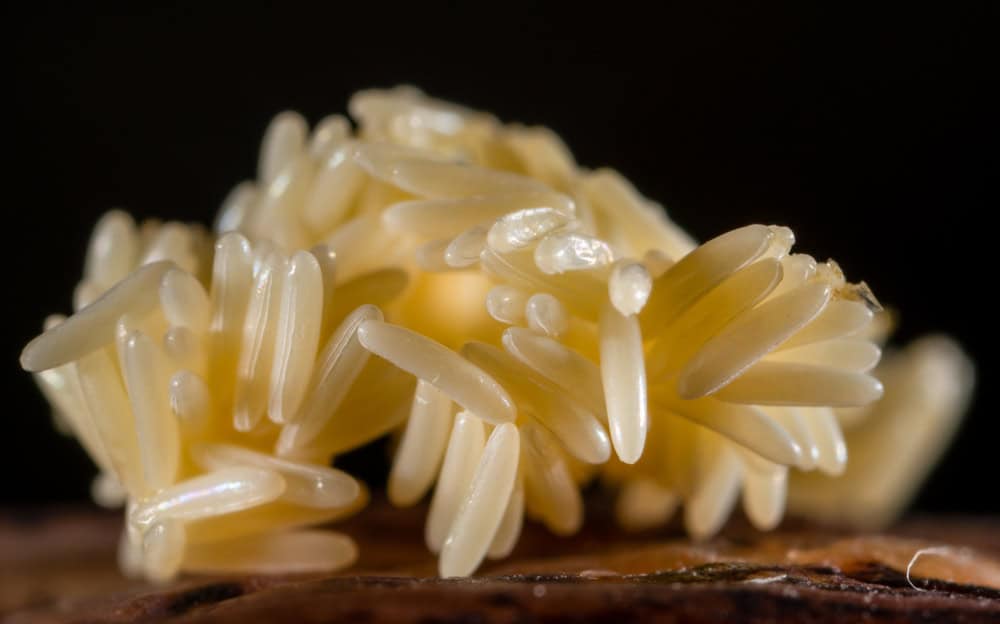
Fly eggs are extremely tiny, measuring approximately 1/8 inch in length, appearing as small white or cream-colored elongated specks resembling fine grains of salt or rice, often deposited in clusters on organic matter.
Common pest species including house flies (Musca domestica) and blow flies (Calliphora species) produce similar-appearing eggs requiring magnification for confident identification. Fruit flies (Drosophila melanogaster) lay even smaller eggs requiring high magnification for observation.
Fly eggs hatch within 12-24 hours in warm conditions, making detection and rapid removal critical, preventing maggot emergence. Once hatched, eggs disappear and tiny maggots become visible—small white larvae measuring 1/4 inch requiring different control approaches. The brief egg stage creates a narrow intervention window before larvae emerge requiring prompt action when eggs are discovered.
Different fly species lay eggs on different materials—house flies prefer decaying matter and animal waste, fruit flies prefer fermenting fruits and vegetables, drain flies lay eggs in moist organic-rich drain slime. Understanding specific fly species infesting properties helps identify primary egg-laying locations requiring focused sanitation efforts. Incomplete sanitation leaving some egg-laying sites allows population continuation despite visible egg removal.
Where do flies lay eggs?
Flies lay eggs on decomposing organic matter including animal waste, food waste, trash, decaying fruits and vegetables, moist drain biofilm, carcasses, and any accumulating organic material providing moisture and nutrients for larval development. House flies concentrate egg-laying in manure, trash, food waste, and feces. Fruit flies lay eggs on fermenting fruits, vegetables, drains, and any fermenting organic liquids. Drain flies lay eggs in drain biofilm accumulations and moist organic-rich areas.
Kitchen and food preparation areas concentrate fly egg-laying through food waste, spilled foods, and trash accumulations. Garbage disposal drains and clogged drains provide ideal egg-laying environments with moist biofilm and organic material. Fruit bowls, compost containers, and stored fruits create ideal conditions for fruit fly egg-laying and larval development.
Outdoor areas including dumpsters, trash areas, animal enclosures, and waste management zones support massive fly populations laying thousands of eggs continuously. Pet waste areas and outdoor manure support blow fly populations. Properties with inadequate waste management, exposed garbage, or poor sanitation create ideal fly breeding environments supporting continuous egg production and population establishment.
Hidden areas including wall voids, attics, and areas with dead animals provide protected egg-laying sites difficult to locate and sanitize. Deceased rodents or birds create organic matter supporting fly reproduction for weeks until complete decomposition. Identifying and removing carcasses and organic matter sources eliminates primary egg-laying locations.
Do fly eggs carry diseases?
Yes, fly eggs themselves carry pathogens acquired from egg-laying substrates including fecal bacteria, Salmonella, E. coli, and various disease organisms transferred to eggs during deposition on contaminated materials. Hatched maggots feeding on contaminated organic matter accumulate additional pathogens. When maggots develop into adult flies, they transfer accumulated pathogens to food, surfaces, and living spaces through contamination.
Fly-contaminated foods create direct disease transmission pathways—eggs and maggots developing on contaminated materials produce adult flies carrying pathogens spreading to food supplies and preparation surfaces. Consuming contaminated foods creates illness risks. Even small numbers of flies can transmit serious pathogens to foods.
The combination of disease-contaminated substrate, pathogen accumulation during larval development, and adult fly disease transmission creates significant health hazards. Unlike certain pests causing no disease transmission, flies represent genuine health emergencies requiring urgent elimination. Discovering fly eggs should trigger immediate action preventing larval development and adult emergence.
Properties with fly eggs indicating established breeding populations present household health threats requiring professional intervention. Incomplete home sanitation allowing egg survival enables continuing fly populations maintaining disease transmission risks indefinitely. Professional pest control assessment identifies all breeding locations enabling complete remediation.
How do you get rid of fly eggs?
Remove fly eggs through immediate sanitation including cleaning contaminated surfaces thoroughly, disposing of infested organic matter, sanitizing affected areas with disinfectants, and eliminating moisture and organic material supporting egg development. Boiling water eliminates eggs on washable surfaces. Bleach solution kills eggs on non-porous surfaces. Removal of infested materials including food waste and debris prevents egg survival and larval development.
Drain cleaning and biofilm removal eliminate drain fly eggs and breeding sites. Use drain cleaning products, enzymatic drain cleaners, or professional drain cleaning removing organic biofilm where drain flies deposit eggs. Regular drain maintenance prevents biofilm accumulation creating ideal breeding conditions.
Trash and garbage management including sealed containers and frequent disposal prevents fly egg accumulation. Compost containers require sealed designs preventing fly access. Pet waste removal and proper sanitation eliminate major fly breeding sources supporting large populations.
Once primary breeding sources are eliminated through sanitation, chemical treatments become effective. Drain treatments, fly baits, and residual surface treatments kill remaining eggs and emerging larvae. Without sanitation eliminating breeding sites, chemical treatments provide only temporary relief—flies continue reproduction from untreated breeding sites reestablishing populations.
Signs you might have a fly infestation
Multiple indicators help identify fly problems requiring intervention:
- Visible flies indoors: Multiple flies appearing in kitchens, around garbage, or near food sources indicate breeding populations nearby.
- Fly clusters around drains: Concentration of flies around kitchen or bathroom drains indicates drain fly breeding in drain biofilm.
- Maggots in trash or drains: Tiny white larvae in garbage or drain slime indicates active larval development from previously laid eggs.
- Persistent fly problems despite cleaning: Ongoing fly appearance despite basic sanitation suggests hidden breeding sites requiring professional assessment.
- Fly attraction to specific areas: Concentration of flies in kitchens or around specific trash areas indicates egg-laying locations requiring focused attention.
- Fruit flies in kitchens: Small flies hovering around fruits, vegetables, or drains indicates fruit fly breeding requiring specific management.
- Odors from organic decay: Musty or decaying odors in areas where flies concentrate suggest hidden organic matter supporting breeding.
How to prevent a fly infestation
Preventing fly infestations requires sanitation and elimination of breeding sources:
- Remove organic matter: Dispose of food waste, trash, compost promptly preventing fly egg-laying substrates.
- Seal garbage containers: Use sealed trash bins and compactors preventing fly access to waste materials.
- Clean drains regularly: Use enzymatic drain cleaners and drain brushes removing biofilm where drain flies establish breeding.
- Wash produce immediately: Store fruits and vegetables in refrigeration preventing fermentation supporting fruit fly breeding.
- Fix plumbing leaks: Eliminate moisture and standing water reducing conditions favoring fly breeding.
- Screen windows and doors: Install tight-fitting screens preventing outdoor fly entry to structures.
- Remove animal waste: Clean pet areas promptly and remove droppings preventing fly egg-laying on waste materials.
How to get rid of a fly infestation
Eliminating fly infestations requires coordinated sanitation and targeted treatments:
- Conduct complete sanitation audit: Identify all organic matter, breeding sites, and moisture sources supporting fly populations.
- Apply drain treatments: Use enzyme-based or chemical drain treatments eliminating drain fly breeding sites and biofilm.
- Use fly baits and traps: Deploy sticky traps and bait stations attracting and capturing adult flies reducing populations.
- Apply residual treatments: Treat surfaces and entry points with appropriate insecticides killing flies and preventing re-entry.
- Remove carcasses: Locate and remove deceased animals or birds providing organic matter supporting fly reproduction.
- Seal entry points: Close cracks, gaps, and openings preventing outdoor flies from entering structures.
- Contact professional pest control: Seek expert assistance for persistent infestations, identifying hidden breeding sites, and implementing comprehensive management eliminating populations and preventing reinfestation.
Conclusion
When dealing with fly infestations and fly egg presence throughout your property and need expert assessment confirming infestation severity and appropriate treatment pricing, contact our partners today for a free quote and comprehensive evaluation.
Our pest control experts will assess the extent of fly infestation indicated by visible flies indoors, maggots in trash or drains, fly egg clusters on organic matter, and fly concentration patterns in kitchens and around breeding sources.
FAQs about fly eggs
Here are some commonly-asked questions about fly eggs from homeowners.
A: Fly eggs on food appear as tiny white or cream-colored specks resembling fine grains of salt, measuring approximately 1/8 inch in length, often deposited in clusters on moist food surfaces. Eggs are barely visible to the naked eye, requiring close inspection for detection. Once hatched within 12-24 hours, tiny white maggots become visible consuming food and producing rapid spoilage. Discovering eggs indicates immediate food contamination requiring disposal.
A: Yes, fly eggs can be removed through thorough cleaning and disposal of contaminated food or materials, using boiling water or bleach solution to sanitize affected surfaces, and eliminating underlying breeding sources. However, incomplete sanitation leaving hidden breeding sites allows continued fly reproduction. Professional assessment ensures complete identification of all egg-laying locations and comprehensive elimination preventing population reinfestation from overlooked breeding sites.
A: Yes, fly eggs carry pathogens including Salmonella, E. coli, and other disease organisms acquired from egg-laying substrates, transmitting serious illnesses through food contamination. Consuming foods with fly eggs or hatched maggots causes direct disease transmission and gastrointestinal illness. Even small numbers of eggs on foods create health risks requiring immediate disposal. Fly-contaminated foods should never be consumed regardless of appearance or extent of contamination.