
German Cockroaches: Identification and Prevention
Key Takeaways
- German cockroaches are small, tan to light brown cockroaches typically identified by two dark parallel stripes behind the head and are commonly found in kitchens, bathrooms, and other warm, humid indoor areas.
- They reproduce quickly and can establish large indoor populations, making early identification and treatment important for preventing an infestation from spreading.
- Common signs of German cockroach activity include multiple small roaches indoors, activity around appliances and cabinets, droppings, egg cases, and cockroaches hiding in cracks or crevices during the day.
- Prevention focuses on removing food and moisture sources, cleaning grease and crumbs, storing food in sealed containers, fixing leaks, sealing cracks, and monitoring high-risk areas with traps.
- German cockroaches can contaminate food and surfaces and contribute to indoor allergens, so persistent activity may require professional pest control using a combination of targeted treatments, sanitation, and ongoing monitoring.
German cockroaches are small, brown kitchen-infesting insects reproducing rapidly in warm, humid environments, establishing persistent indoor populations resistant to control efforts through quick reproduction cycles and behavioral adaptability.
Having some knowledge about these formidable indoor pests helps homeowners recognize infestations early, distinguish them from other cockroach species requiring different management approaches, and appreciate the necessity of professional intervention combining comprehensive sanitation, targeted baiting, and professional treatments eliminating populations that quickly develop insecticide resistance.
What are German cockroaches?
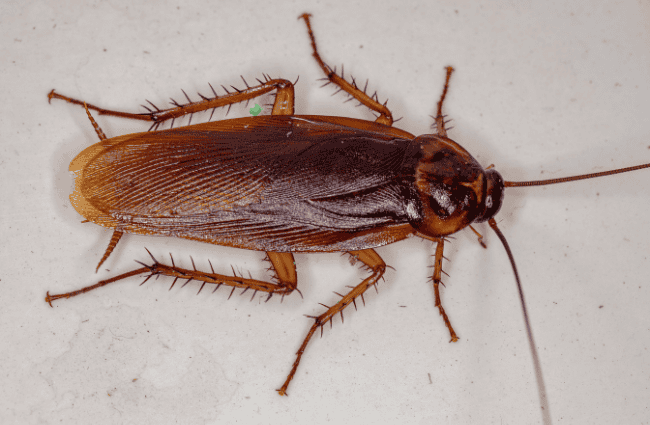
German cockroaches (Blattella germanica) are small, tan to light brown cockroaches measuring approximately 1/2 to 5/8 inch in length, characterized by two parallel dark stripes running the length of their thoraxes, and representing the most abundant and economically significant pest cockroach species globally.
These cockroaches belong to the family Ectobiidae and are native to Europe, now distributed worldwide as invasive pests infesting buildings in virtually every inhabited region. They’re significantly smaller than American or Oriental cockroaches, approximately one-third the size of American roaches.
German cockroaches are obligate indoor pests requiring heated buildings for survival—they cannot survive outdoors in temperate regions due to cold sensitivity and moisture requirements found exclusively indoors.
Unlike peridomestic species living partially outdoors, German roaches complete entire lifecycles entirely within structures, establishing persistent populations concentrated in kitchens, bathrooms, and other moisture-rich areas. Their preference for warm, humid microhabitats near heat sources including stoves, refrigerators, and under-sink areas creates characteristic distribution patterns.
These cockroaches are remarkably adaptable, readily exploiting diverse food sources including grease, soap, starch, meat, plant material, and virtually any organic matter available in kitchens. They’re nocturnal, hiding in cracks, wall voids, and protected spaces during daylight, becoming active at night when they forage for food and mates. Their cryptic behavior, rapid reproduction, and insecticide resistance make German cockroaches formidable indoor pests requiring comprehensive management approaches.
Are German cockroaches common pests?
German cockroaches are by far the most common indoor cockroach pest globally, infesting residential homes, apartments, restaurants, hospitals, food processing facilities, and virtually every building type where food and warmth are available.
Their abundance in food service establishments, combined with global transport through commerce, makes them the default cockroach species in most regions. Multi-family housing including apartments and condominiums experience particularly severe German cockroach problems due to connected wall voids enabling population movement between units.
These cockroaches create pest status through rapid reproduction enabling population growth from single pregnant females to thousands in months. Development from egg to adult requires only 3-4 months, with females producing 10,000+ offspring annually in suitable conditions. This reproductive capacity, combined with insecticide resistance, makes German cockroach control extremely challenging, requiring professional expertise beyond typical homeowner capabilities.
Seasonal patterns show year-round activity in heated buildings with population growth accelerating during winter months when all roaches concentrate indoors and external competition disappears. However, continuous reproduction in stable environments creates persistent infestations year-round rather than seasonal problems. Late summer and fall may show increased activity visible to occupants as large populations become impossible to hide completely.
The combination of rapid reproduction, insecticide resistance, preference for kitchens in human activity centers, cryptic hiding behavior making detection difficult, and establishment in heated buildings worldwide makes German cockroaches the most economically significant pest cockroach species requiring professional intervention for complete elimination.
Lifecycle of a German cockroach
German cockroaches undergo incomplete metamorphosis progressing through egg, nymphal, and adult stages, with development requiring 3-4 months under favorable warm conditions, enabling multiple overlapping generations annually in heated buildings supporting continuous reproduction.
Females produce distinctive tan to brown egg cases (oothecae) measuring approximately 1/4 inch long, containing 30-40 eggs. Unlike other cockroach species dropping oothecae, German cockroach females carry egg cases internally until eggs are ready to hatch, then deposit them in protected locations.
Eggs hatch after 3-4 weeks within the maternal ootheca, producing tiny nymphs resembling miniature adults. Nymphs develop through 6-7 molts over 2-3 months, gradually darkening and developing wings as they mature. Young nymphs are gregarious, clustering together under refugia, becoming more solitary and territorial as they mature and approach adulthood. Both nymphs and adults feed on similar materials, though young nymphs consume less than larger individuals.
Adult females become sexually mature shortly after final molt, beginning reproduction within days. Females live approximately 1 year producing multiple egg cases at regular intervals throughout their lifespans. Males live several months competing for mating opportunities. The combination of short developmental period and long female lifespan enables rapid population growth—a single gravid female entering a kitchen can establish populations exceeding 10,000 individuals within 6 months in ideal conditions.
Multiple overlapping generations coexist simultaneously with eggs, nymphs, and adults present continuously in infested kitchens, complicating control efforts since treatments must target all life stages simultaneously. The accelerating population growth, rapid reproduction, and persistence of multiple generations make German cockroach infestations exponentially more difficult to control than slower-reproducing cockroach species.
Where are German cockroaches located?
German cockroaches occur worldwide across all inhabited continents, distributed through international commerce, airline food carts, shipments, and human travel, establishing populations in heated buildings throughout temperate and warm regions globally.
Within North America, they’re ubiquitous in food service establishments, residential buildings, institutions, and any heated structure with food access. They’re more abundant in northern climates than peridomestic species dependent on outdoor conditions, since German roaches require only indoor heat and moisture.
Within buildings, German cockroaches concentrate in kitchens, bathrooms, and moisture-rich areas where they cluster in protected refugia near food and water sources. Common harborage includes cracks behind and under stoves, beneath refrigerators, under sinks, inside cabinet spaces, wall voids, and any narrow protected spaces providing darkness and moisture. They establish populations in appliances, electrical equipment, and any location providing warmth and protection.
Multi-family housing with connected wall cavities, shared plumbing, and adjacent units creates ideal German cockroach habitat enabling rapid population spread between units. Apartment buildings with poor maintenance, water leaks, and inadequate sanitation experience severe infestations. Single-family homes, while less severely affected than apartments, still support substantial populations in kitchens and bathrooms.
Geographic distribution is essentially unlimited within heated buildings worldwide. Cold-sensitive populations collapse during winter in unheated structures, but German roaches thrive in heated buildings year-round regardless of external climate. Their dependence on indoor conditions rather than outdoor habitats makes their range essentially unlimited in developed regions with prevalent heated buildings and food sources.
Are German cockroaches dangerous?
German cockroaches are dangerous disease vectors transmitting serious pathogens including Salmonella, E. coli, Campylobacter, and various viruses through direct contamination of food, food preparation surfaces, and kitchen areas with bacteria from fecal material and body surfaces.
Salmonella and E. coli cause serious gastrointestinal illness affecting vulnerable populations particularly severely. Cross-contamination through cockroach contact with stored foods, dishes, and utensils creates direct disease transmission routes in kitchens.
German cockroaches trigger severe allergies and asthma through accumulated waste, fecal particles, shed skins, saliva, and other allergenic materials. In heavily infested buildings, cockroach allergens become significant airborne pollutants creating constant respiratory irritation for occupants. Children are particularly affected with cockroach allergies contributing to asthma development and severity. Medical literature documents severe asthma exacerbation in individuals living in cockroach-infested housing.
Beyond disease transmission, German cockroach infestations contaminate foods, water, and stored products rendering them unsafe for consumption. Cockroach droppings and debris accumulating on surfaces, in cabinets, and throughout kitchens creates sanitation nightmares requiring complete cleanup and replacement of contaminated materials. The psychological distress from discovery of cockroach infestations creates significant stress and quality-of-life impacts for residents.
The combination of multiple disease transmission routes, allergen production, food contamination, and psychological impacts makes German cockroach infestations serious health threats requiring professional intervention. Unlike cosmetic nuisance pests, German cockroaches represent genuine health emergencies warranting immediate professional pest control to protect household occupant health.
How to identify a German cockroach
German cockroaches possess distinctive characteristics making identification relatively straightforward:
- Small size: Adults measure 1/2 to 5/8 inch in length, significantly smaller than American cockroaches (1-2 inches) or Oriental cockroaches (1 inch), appearing distinctly small compared to most other pest cockroaches.
- Tan to light brown coloration: Bodies are tan, beige, or light brown uniformly colored without the reddish hues of American cockroaches or dark coloration of Oriental roaches.
- Distinctive parallel stripes: Two dark brown parallel stripes run the length of thoraxes creating unmistakable marking patterns clearly visible distinguishing German roaches from unmarked species.
- Fully developed wings in both sexes: Both males and females possess long wings extending beyond abdomens enabling flight capability, though Germans fly less frequently than some species.
- Smaller head and antennae: Heads are relatively small with slender antennae, creating an overall sleek appearance different from the broader heads of other cockroach species.
- Kitchen and bathroom association: Finding roaches in kitchens, under appliances, in bathrooms, and near water sources strongly indicates German cockroaches rather than other species preferring different habitats.
- Clustered cockroaches indoors: Discovering multiple small cockroaches in protected indoor spaces indicates German cockroach populations rather than isolated individual invaders from outdoors.
How to prevent a German cockroach infestation
Preventing German cockroach establishment requires excellent sanitation and exclusion:
- Maintain immaculate sanitation: Remove all food sources including spilled crumbs, grease, and organic debris, clean under appliances regularly, eliminate standing water, and deny cockroaches access to food and moisture supporting populations.
- Seal cracks and crevices: Caulk gaps in cabinets, around pipes, behind and under appliances, and throughout kitchens eliminating harborage where German cockroaches hide during daylight.
- Eliminate moisture sources: Fix leaking pipes, improve ventilation reducing humidity, correct drainage problems, and maintain dry conditions discouraging cockroach establishment in kitchens and bathrooms.
- Store foods in sealed containers: Transfer vulnerable foods into glass, metal, or thick plastic containers preventing cockroach access and cross-contamination between food items.
- Monitor with sticky traps: Place cockroach monitoring traps in kitchens and suspected areas detecting early infestations before populations become established and overwhelming.
How to get rid of a German cockroach infestation
Eliminating German cockroach infestations requires comprehensive professional treatments:
- Deploy targeted gel baits: Place appropriate cockroach baits in kitchens, under appliances, in cabinets, and suspected harborage areas allowing workers to distribute toxin throughout colonies via food exchange and trophallaxis.
- Apply residual insecticides strategically: Treat cracks, crevices, wall voids, cabinet spaces, and areas where cockroaches hide with long-lasting products providing continued control after initial bait effectiveness.
- Use growth regulators: Apply insect growth regulators disrupting cockroach reproduction and development, preventing nymphs from maturing into reproductive adults sustaining populations.
- Implement comprehensive sanitation: Combine chemical treatments with thorough cleaning removing food residues, grease, and organic debris eliminating attractants supporting populations despite chemical applications.
- Contact professional pest control: Seek expert assistance for any German cockroach infestation—professionals provide integrated management combining baits, residual treatments, growth regulators, sanitation guidance, and monitoring protocols essential for complete elimination of insecticide-resistant populations.
Conclusion
When dealing with German cockroach problems throughout your property and need expert solutions addressing rapid-reproducing infestations in kitchens, bathrooms, and food preparation areas, contact Aptive today for a free quote and comprehensive assessment.
Our pest control experts will accurately identify cockroach infestations confirming German cockroaches versus other species requiring different treatment approaches, assess infestation extent and severity throughout kitchens and bathrooms, and identify all harborage areas and hiding locations.
FAQs about German cockroaches
Here are some frequently-asked questions about German cockroaches from homeowners.
A: German cockroaches possess fully developed wings enabling flight, though they fly infrequently and for only short distances when escaping threats or dispersing to new locations.
Their flight capability is limited compared to species like smokybrown cockroaches that fly readily and frequently. Most German cockroach movement occurs through crawling along surfaces and through wall cavities rather than sustained flight, making them less mobile than some other cockroach species.
A: German cockroaches don’t bite humans—they possess chewing mouthparts adapted for consuming foods and organic materials, never for attacking people.
They show no aggressive behavior toward humans since people aren’t food sources. Even direct handling won’t provoke bites—German roaches prefer escaping to confrontation. They’re completely harmless from a direct physical attack perspective, though disease transmission through contamination poses serious health threats.
A: German cockroaches reproduce extremely rapidly—females produce multiple egg cases producing thousands of offspring annually—enabling swift population recovery from failed control attempts.
They’ve developed widespread insecticide resistance through generations of chemical exposure, making standard treatments ineffective. Their cryptic hiding behavior in tiny cracks and wall voids, combined with multiple overlapping generations requiring simultaneous targeting, makes elimination extremely difficult without professional integrated management combining multiple treatment methods simultaneously.