
Mosquitoes in 2026: What You Should Know and How to Prevent
Key Takeaways
- Mosquito season in 2026 may start earlier and last longer in many areas due to mild winters, heavy snow insulation, warmer springs, and urban heat conditions.
- Mosquitoes can breed in very small amounts of standing water, including bottle caps, plant saucers, clogged gutters, toys, tarps, buckets, and birdbaths.
- The Asian tiger mosquito is changing backyard mosquito activity because it bites during the day and breeds in small containers around homes.
- Mosquito prevention should start before adults are visible, since eggs and larvae can develop quickly once temperatures rise and water collects.
- Mosquitoes are more than a nuisance because they can transmit diseases such as West Nile virus, dengue fever, malaria, Jamestown Canyon virus, and emerging viruses like Oropouche.
- Children, older adults, immunocompromised people, and pets may face higher risks during longer mosquito seasons, especially when outdoor exposure increases.
- Homeowners should focus on prevention instead of reaction by removing standing water, cleaning outdoor containers, using fans on patios, fixing screens, coordinating with neighbors, and contacting a local pest control company when mosquito activity continues.
Mosquitoes in 2026: What to Know and Prevention
You might have seen it on the news: mosquitoes coming earlier this year, mosquitoes living year-round, mild winter causes early mosquito problems. What does that mean for you, your family, and your pets?
For most homeowners, it means the mosquito off-season could be quiet depending on where you live. We used to have an agreement with nature: we stay inside for the winter, the mosquitoes die off, and we all start fresh in spring. But as we move through 2026, we see that these terms have changed.
If you feel like you’re reaching for the repellent before you’ve even put away your winter coat, you aren’t imagining it. Between polar vortexes and the rise of urban heat islands, your backyard has become a year-round resort for the world’s deadliest animal.
Here is what is actually happening in your yard right now—and why your old mosquito strategy will need to change.
The “Snow Blanket” Paradox
With some cold snaps this past winter, you might assume the mosquito population took a hit. Unfortunately, the opposite is often true. When we get heavy snowfall followed by a mild spring, that snow acts as a giant insulating blanket for the ground.
Underneath that white powder, the temperature stays remarkably stable. Mosquito eggs—and even some adult overwintering species—hunker down in the leaf litter, protected from the killing frost by the very snow you’re shoveling. When that snow melts, it doesn’t just clear the way; it creates millions of tiny, nutrient-rich nursery pools. By the time the first 60°F day hits, those eggs aren’t just waking up—they’re already ahead of schedule.
This means you not only have to deal with mosquitoes earlier in the year, but it also gives them more generations per year. This means even more mosquitoes towards the end of the year that you will have to prepare for.
The Rise of the “Daytime Assassin”
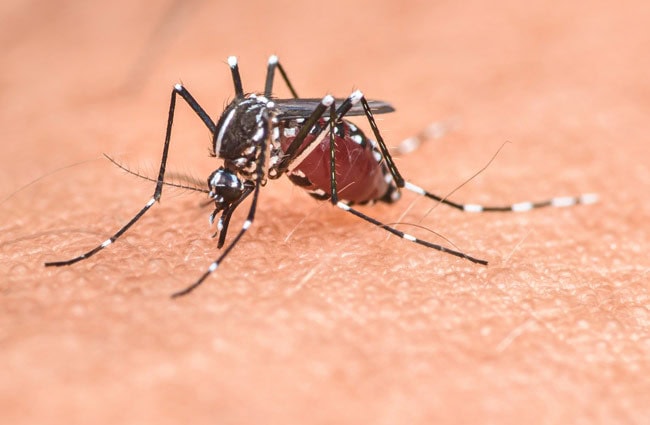
If you grew up thinking mosquitoes were only a problem at dusk, you should know that things have changed due to the Asian Tiger Mosquito (Aedes albopictus).
Unlike most of the native species that wait for the sun to go down, these invasive terrors are aggressive daytime biters. They don’t care about your sunset patio plans and they’ll hit you while you’re mowing the lawn at noon. Even worse? They are known as “container breeders.”
While native mosquitoes prefer swamps and ponds, the Asian Tiger only needs a bottle cap’s worth of water to raise a family. That forgotten toy in the grass or the lip of a crumpled tarp is now a high-density mosquito apartment complex. This is why it’s so important to get rid of any standing water you can.
Why do you need to be concerned?
Did you know that the mosquito is known as the most dangerous animal in the world? That’s because of all the diseases they can transmit. West Nile remains the most common mosquito-borne disease in the U.S., but in 2025 there was a 42% increase in reported cases compared to the previous year. What’s more concerning is the rise in “neuroinvasive” cases—where the virus attacks the brain or spinal cord.
Here are some things to keep in mind as mosquito season approaches:
- The 2026 Risk: Because of the mild winter, Culex mosquitoes (the primary carriers of WNV) started their breeding cycles weeks earlier. This gives the virus more time to “amplify” in bird populations before jumping to humans.
- What to watch for: Most people feel nothing, but 1 in 150 will develop high fever, neck stiffness, or disorientation. If you’re over 50 or have a compromised immune system, your “backyard safety” is now a top-tier health priority.
Diseases Mosquitoes Spread
For decades, dengue and malaria were things you only worried about when packing for a tropical vacation. That changed in 2024 and 2025. We are now seeing “locally acquired” cases in states like Florida, Texas, California, and even Maryland.
- Dengue Fever: Often called “breakbone fever” because of the intense joint and muscle pain it causes. In 2025, the U.S. saw over 3,800 locally acquired cases. This is driven by the Aedes aegypti mosquito, which has now successfully adapted to urban centers in the Southern and Western U.S.
- Malaria: While still rare, the “re-emergence” of local transmission in 2023 and 2024 has public health officials on high alert. The Anopheles mosquito is thriving in the warmer, wetter springs we’re seeing in 2026.
Along with the well-known viruses mosquitoes spread, there are also some additional ones that have emerged.If you haven’t heard these names yet, you likely will by the end of the summer.
- Oropouche Virus: Emerging from the Amazon basin, this virus is spread by midges (no-see-ums) and mosquitoes. It causes sudden fever and headaches, but the kicker is that it has a 60% relapse rate—you think you’re better, and then it hits you again two weeks later.
- Jamestown Canyon Virus (JCV): This one is a homegrown threat, primarily in the upper Midwest and Northeast. It’s spread by various mosquitoes that feed on deer. Unlike some other viruses, JCV can be passed from a mother mosquito directly to her eggs, meaning the virus is “pre-loaded” into the population before the season even starts.
Families Are Impacted Too
It’s not just about the adults. Longer seasons mean more exposure for the most vulnerable members of your household.
Children spend more time outside, and their immune systems are still learning how to handle these pathogens. Furthermore, “Skeeter Syndrome”—an extreme allergic reaction to mosquito saliva—is becoming more common as invasive species like the Asian Tiger mosquito spread.
For dog and cat owners, the longer mosquito season is a direct threat to heartworm prevention. If you usually stop your pet’s heartworm meds in November, you’re leaving them wide open in this new “year-round” reality.
Why Your 2025 Strategy Won’t Work in 2026
Most homeowners approach mosquito control like a chore: they wait until they get bitten (or start seeing adults flying), then they spray with ineffective formulas. In 2026, that model is a recipe for a miserable summer.
With West Nile virus cases jumping by over 40% in recent years and the expansion of the Aedes aegypti (the Yellow Fever mosquito) further north than ever before, the stakes have shifted from “annoyance” to “healthcare.”
To reclaim your yard this year, you need to shift thinking from reacting to preventing.
1. The “Bottle Cap” Audit
Make sure to check your yard after rain—that’s when mosquito breeding sites become obvious. Look under deck railings where water collects, in plant saucers you forgot to empty, in abandoned buckets, tarps with sagging centers, and any depression that holds moisture.
Mosquitoes need surprisingly little—a bottle cap’s worth of water sitting for a few days is sufficient. Even ornamental birdbaths become nurseries if you skip cleaning for a week. The problem compounds quickly because each female lays hundreds of eggs, and those eggs hatch into larvae within days during warm months.
2. The “Orbiting” Science
Fascinating new flight models from MIT and Georgia Tech show that mosquitoes don’t just fly randomly toward you. They use a “multimodal search.” They see your silhouette from a distance, then they “smell” the CO2 you exhale. When they get both cues, they switch to an “orbiting” pattern—circling you like a shark before they land.
You can use this against them.A simple oscillating fan on your patio disrupts their “orbit.” Mosquitoes are weak fliers and if you create a breeze of just 5 mph, you’ve effectively built an invisible wall they find hard to get through.
3. Rethink the “Bug Zapper”
If you still have one of those purple-light “bug zapper” on your porch, it’s not just zapping mosquitoes. All you’re doing is killing beneficial moths and beetles. Mosquitoes aren’t really attracted to that light–they are attracted to you.
To dissuade mosquitoes from your outdoor areas, reduce the number of flowering plants in those areas. Both males and females need nectar for energy, so flowering plants attract them.
4. Make Friends with Your Neighbors
Mosquitoes don’t respect fence lines. If your neighbors have standing water sources they aren’t taking care of, that will impact your property. The more your neighbors know about mosquito breeding habitats, the more everyone can be part of the solution.
5. Call Your Local Pest Control Company
Pest control companies are trained to search out all those hidden water sources and treat in the right places. They have the right tools, knowledge, and experience to safely and effectively do the job.
Many of those mosquito sprays you can buy in home and garden stores have the same active ingredient in them. If you use them, this means you are treating your lawn the same product over and over again. This can cause resistance and make mosquitoes a bigger issue.
The Bottom Line
The fact that mosquito season is earlier isn’t a coincidence–it’s likely the new baseline. Mosquitoes are adapting to our warmer winters and our urban sprawl faster than we are adapting our habits.
Don’t wait for the first headline in summer. The war for your backyard is being won or lost right now, in the wet leaves and the clogged gutters of spring. Dump the water, fix the screens, and start thinking like a predator—because the mosquitoes certainly are.
Frequently Asked Questions About Mosquitoes in 2026
A: Mosquitoes may appear earlier when temperatures warm sooner, standing water is available, and mild winter conditions allow eggs or overwintering mosquitoes to survive. Heavy snow can also insulate the ground, while spring melt and rain create new breeding sites. Because mosquitoes develop quickly once conditions are favorable, homeowners may notice activity before the traditional start of mosquito season.
A: Mosquitoes can breed in surprisingly small amounts of standing water. Items like bottle caps, plant saucers, toys, clogged gutters, buckets, tarps, birdbaths, and trash containers can all collect enough water for mosquito eggs and larvae. Checking the yard once a week and emptying, scrubbing, covering, or turning over water-holding items can help reduce mosquito breeding around the home.
A: Mosquitoes are more than a nuisance because some species can spread diseases to people and pets. In the U.S., mosquito-borne concerns can include West Nile virus, dengue, malaria in rare local cases, Jamestown Canyon virus, and other emerging illnesses. Most mosquito bites do not lead to serious illness, but prevention matters, especially for children, older adults, immunocompromised people, and pets exposed during longer mosquito seasons.