
Protecting Your Investment: The Ultimate Guide to Termite Control
Key Takeaways
- Termites can cause serious structural damage by feeding on wood from the inside out, often going unnoticed until repairs become costly.
- The two termite types homeowners most often need to understand are subterranean termites, which usually enter from soil through mud tubes, and drywood termites, which can live directly inside dry wood.
- Common signs of termites include swarmers, discarded wings, mud tubes on foundations, hollow-sounding wood, surface blisters, and doors or windows that suddenly stick.
- DIY sprays may not eliminate the colony and can sometimes cause termites to move into harder-to-detect areas of the home.
- Professional termite control may involve bait systems, liquid termiticide barriers, fumigation for certain drywood termite issues, and regular inspections.
- Homeowners can reduce termite risk by fixing moisture problems, keeping wood away from soil, managing mulch near the foundation, and storing firewood away from the house.
- Annual termite inspections are one of the best ways to catch activity early before major structural damage develops.
For most people, a home is the single largest financial investment they will ever make. Yet, across the United States, an invisible threat quietly threatens that investment every single day. While an accurate estimate is tough to make, many sources say that termites cause an estimated $5 billion in property damage annually in the U.S. alone—damage that is almost never covered by standard homeowners insurance policies.
Because these wood-destroying insects are hidden inside wood, feeding from the inside out, an infestation can go unnoticed for years until severe structural issues emerge. To protect your property, you don’t need to become an entomologist, but you do need to understand the fundamentals of termite control, how to spot the early signs of termites, and the difference between effective termite treatment and dangerous DIY mistakes.
Knowing the Enemy: Subterranean vs. Drywood Termites
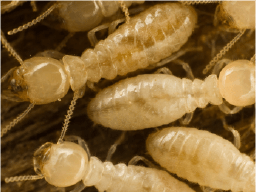
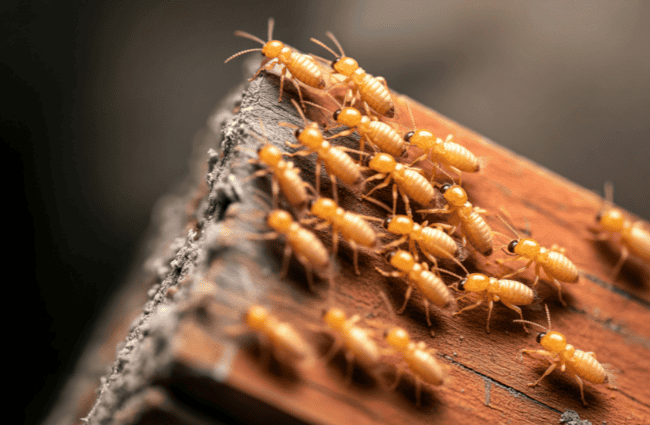
Termites form colonies with workers, soldiers, and reproductives. The reproductives are often called alates or swarmers. Despite the colony being mostly workers, the winged reproductives or soldiers are needed to identify them.
Not all termites are the same. In the U.S., homeowners primarily contend with three distinct types of termites, each requiring entirely different approaches to termite prevention and remediation. Of the three, dampwood termites are typically encountered the least often.
Drywood Termites
Common primarily in coastal, southern, and southwestern states (such as Florida, California, and Texas), drywood termites do not need contact with the soil. They establish their colonies directly inside sound, dry wood, such as attic rafters, structural studs, window frames, or hardwood furniture.
The wood needs to be 12% or less moisture, since they only need moisture from the ambient humidity and the wood they consume, they are much harder to track using traditional ground-focused methods.
While you can look at the wings of the swarmers to separate these from other types of termites, the best way is to look for their droppings. These look like small, light colored pellets and have six hexagonal sides. They are often found in little piles because termites push them out through specific exit holes.
Subterranean Termites
Found in almost every state, subterranean termites are by far the most destructive. They live in massive colonies deep within the soil—sometimes containing hundreds of thousands of individuals. Because their soft bodies dry out easily, they require a constant connection to underground moisture. They travel from the earth into your home’s framing via mud tubes, attacking your structure from the ground up. One of the most serious is the invasive Formosan subterranean termite.
Subterranean termites are best identified by their location. Colonies are most often in the ground, though the Formosan can form what are called “carton nests” if conditions are right. They are often identified by the narrow mud tubes that connect the colony to their foraging sites and they need much higher moisture than the drywood species.
The Early Warning Signs of Termites
Waiting until your floorboards sag to address a pest issue is a recipe for a massive repair bill. Successful termite control relies on early detection. Homeowners should regularly inspect their property for these three classic warning signs:
1. Swarmers and Shed Wings
When a termite colony reaches maturity (usually after 3 to 5 years), it produces “swarmers”—winged reproductive termites designed to leave the nest, find a mate, and start a new colony. Seeing a swarm of insects inside your home, or finding piles of discarded, translucent wings on windowsills or near light fixtures, is a definitive sign of an active infestation nearby.
Most species are attracted to lights at night, so huge clouds of these can be seen by streetlights and home floodlights. Subterranean species often swarm in the early evening after a spring or summer rain. Dampwood termites usually swarm in the middle of a warm day. Depending on where you are in the country, this happens during different months.
2. Mud Tubes on the Foundation
Subterranean termites build earth-and-saliva conduits, known as mud tubes, to bridge the gap between the soil and your home’s wooden framing. These pencil-thin tubes are typically found running vertically up concrete foundation walls, crawl space piers, or behind baseboards.
You can generally tell if a tube is active. By simply scraping off some of it in the middle, termites will soon come to repair it. If the tube is inactive, there won’t be any termite individuals. They need these tubes to maintain the higher humidities they require.
3. Hollow-Sounding Wood and Surface Blisters
As termites consume the cellulose inside wooden beams, they leave the exterior paint or wood grain intact, creating a thin veneer. If you tap a suspected baseboard, windowsill, or support beam with the handle of a screwdriver and it sounds hollow or breaks open easily, you are looking at advanced termite damage. Similarly, dark spots or unexplained blisters on wood flooring can indicate tunnels running just beneath the surface.
Understanding the Structural Damage Risks
Termites are uniquely adapted to digest cellulose, the structural component of wood, thanks to specialized microorganisms in their digestive tracts. Because they work continuously without sleep, a large colony can cause significant structural damage over a relatively short period.
When termites target structural lumber, they prioritize the softer “springwood” layers, leaving a characteristic layered gallery pattern choked with soil or fecal material. Over time, this hollows out load-bearing studs, floor joists, and roof trusses. As the integrity of the wood degrades, the weight of the house causes structural shifts. Classic symptoms of advanced damage include doors and windows that suddenly stick or refuse to close properly, sagging ceilings, and buckling floors.
DIY Bait Stations vs. Professional Termite Treatment
When homeowners discover termites, their first instinct is often to head to the local home improvement store to buy consumer-grade bait stations or liquid sprays. While DIY projects are great for painting a room or fixing a deck, attempting DIY termite eradication is a massive gamble.
Termite baits contain a chitin inhibitor. When they try to molt, the inhibitor stops them from making a new, healthy exoskeleton, and they don’t survive. Baits are great because they use the termites’ behavior against them. They collect the bait as they would normally collect wood, then take it back to the colony and share.
This means one foraging termite can infect many of its colony mates. Baits do take a little longer to get to the colony and start to impact it. However, baits have been shown to completely eliminate termite colonies.
Liquid termiticides can be used and are often referred to as a termite “wrap” in the industry. A trench is dug around the structure, the termiticide is injected into the soil, then covered back up. As termites are foraging, they come up against this liquid border. When termites encounter it, they die and don’t get back to the colony.
Be careful buying a product off the shelf. When a homeowner sprays a visible termite trail with an over-the-counter liquid insecticide, they are often using a repellent chemical. This doesn’t kill the colony–it simply alarms the insects, causing them to abandon that specific wall and find a different, hidden pathway into your home.
In some cases, fumigations may be necessary, especially with drywood termites. A fumigation means sealing up a home with tarps and letting a pesticide gas disperse throughout the area. Termites are eliminated as they breathe in the gas.
The Critical Importance of Annual Inspections
The absolute best tool in any termite control arsenal is a regular, professional eye. Because termites operate out of sight behind drywall, under insulation, and beneath floorboards, a trained professional can catch the microscopic early indicators of an infestation long before a homeowner notices a problem.
An annual professional inspection involves evaluating high-risk zones, including crawl spaces, attic spaces, plumbing penetrations, and the exterior perimeter line. Professionals look for sub-surface anomalies using specialized tools like high-powered inspection lights, moisture meters, and specialized acoustic or thermal imaging sensors. Catching a termite colony during its first year can mean the difference between a minor localized spot treatment and a multi-thousand-dollar structural reconstruction project.
Long-Term Termite Prevention Strategies
While professional treatments protect the structure, homeowners can drastically minimize their property’s attractiveness to termites by practicing proactive environmental management.
- Manage soil-to-wood contact: Never allow the wooden siding, trim, or door frames of your home to make direct contact with the ground. Maintain at least a 6-inch gap of visible concrete foundation around the entire perimeter of your home.
- Rethink your mulch application: Wood mulch is essentially an open invitation for subterranean termites. It retains moisture and provides a literal food bridge straight to your walls. Avoid placing mulch directly against your foundation. Instead, leave a 12-inch gravel or stone border immediately adjacent to the structure.
- Correct moisture and drainage faults: Termites cannot survive without water. Ensure your gutters and downspouts are clear and discharge water at least 3 feet away from your home’s foundation. Fix leaky exterior hose spigots, air conditioning condensate lines, and interior plumbing issues immediately to prevent moisture from pooling against structural wood.
- Store firewood strategically: Never stack firewood, lumber, or cardboard boxes flush against the side of your house or inside a crawl space. Elevate firewood piles off the ground on metal racks and store them at least 20 feet away from the home.
Catching Termites Early
Termites can cause massive damage that takes time and money to fix. By keeping an eye on your home and property, you can catch termites early and minimize the damage. Contacting a professional can give you the peace of mind knowing a trained and licensed individual is looking out for you and your home.