
Weevils 101: What Are Weevils?
If you’ve ever discovered tiny bugs crawling through your flour, rice, or other pantry items, you may have encountered weevils. These small pests can seemingly appear out of nowhere, turning what was once a perfectly good food item into something crawling with insects. While finding bugs in your food is certainly unsettling, understanding what weevils are, how they get into your home, and whether they pose any risks can help you respond appropriately and prevent future infestations.
What are weevils?
Weevils are small insects belonging to the Curculionidae family, the largest family within the beetle order (Coleoptera), with over 60,000 species worldwide. These pests are primarily plant feeders, specialized to consume specific types of plants or plant products. While some weevil species are agricultural pests that damage crops like cotton, alfalfa, and fruit trees, the ones most commonly encountered in homes are pantry pests—particularly rice weevils and grain weevils.
These specialized insects have evolved to feed on and develop within stored grains, cereals, and other dry food products. Pantry weevils have the remarkable ability to penetrate packaging and infest foods before they even reach store shelves or your home. Female weevils lay eggs directly inside food kernels, allowing larvae to develop protected within the food source, which explains why these pests can seem to appear mysteriously in sealed containers.
What do weevils look like?
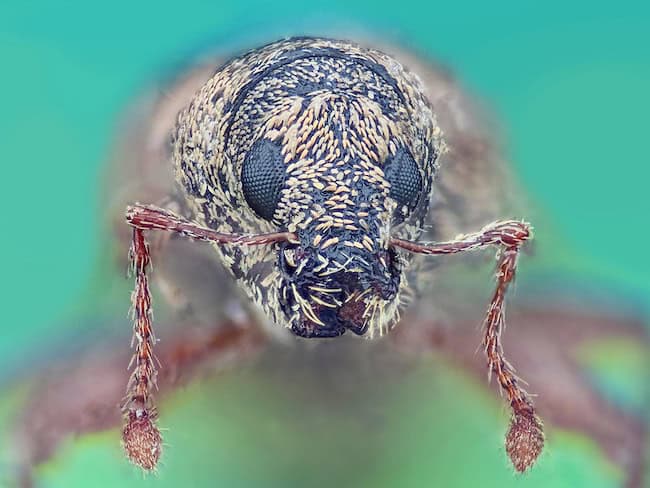
Weevils have a distinctive appearance that sets them apart from other pantry pests. Their most recognizable feature is an elongated snout or “rostrum” extending from their head, which houses their mouthparts and is used for feeding and, in females, for boring holes into food items to deposit eggs. These insects typically measure between 1/8 to 1/4 inch in length, with compact, pear-shaped or oval bodies.
Most common pantry weevils, like rice and grain weevils, range in color from reddish-brown to nearly black and may have light-colored spots or patterns on their wing covers. They have the classic beetle feature of hardened forewings (elytra) that protect their membranous hindwings used for flying. Their legs are relatively short with distinct “knees,” and they have clubbed antennae that may appear bent or “elbowed.” Weevil larvae, which develop inside food items, are rarely seen—they’re cream-colored, legless grubs with brown head capsules, typically curved in a C-shape within their food source until they emerge as adults.
Lifecycle of a weevil
The weevil lifecycle represents a perfect adaptation to exploiting stored foods, allowing these pests to reproduce continuously when conditions are favorable. It begins when a female uses her elongated snout to bore a tiny hole into a grain kernel, seed, or similar food item. She then deposits a single egg inside and seals the hole with a gelatinous secretion that hardens, protecting the developing offspring. This process is repeated many times, with a single female capable of laying 300-400 eggs during her lifetime.
Within a few days, the eggs hatch into small, white, legless larvae that immediately begin feeding on the interior of the food item. These larvae undergo multiple molts as they grow, spending their entire development protected inside the grain kernel. After several weeks, depending on temperature and humidity conditions, larvae pupate within their food source.
The pupal stage lasts approximately one week before adults emerge by chewing their way out of the grain. These new adults quickly mate and begin the cycle again. Under ideal conditions (warm temperatures and sufficient food), the entire lifecycle from egg to reproductive adult can be completed in just 4-6 weeks, allowing for rapid population growth.
Are weevils beetles?
Weevils are definitely beetles, belonging to the order Coleoptera, which encompasses all beetle species. Specifically, weevils constitute the family Curculionidae within this order, representing the largest family of beetles worldwide with over 60,000 described species.
Like all true beetles, weevils share certain defining characteristics, including hardened forewings (called elytra) that protect membranous hindwings, chewing mouthparts, and complete metamorphosis—progressing through distinct egg, larval, pupal, and adult stages during their development. What distinguishes weevils from other beetle families is their characteristic elongated snout or rostrum, which houses their mouthparts at the tip.
This specialized adaptation allows them to bore into plant tissues or seeds to feed and lay eggs. While many people might not immediately recognize weevils as beetles due to their distinctive appearance, entomologists classify them firmly within the beetle order, making them true beetles from a taxonomic perspective.
How do weevils get into flour?
Weevils find their way into flour and other pantry products through several routes. Many infestations begin at food processing or storage facilities where adult weevils can fly in through open windows or doors and lay eggs in bulk supplies. These contaminated products are then packaged and distributed to stores, with the infestation remaining invisible until the eggs hatch after purchase. In other cases, adult weevils enter homes directly through small openings around windows, doors, or utility penetrations, attracted by food odors.
They can also hitchhike on packaged goods brought home from stores, particularly those in paper or cardboard packaging that’s easier to penetrate than sealed plastic or glass containers. Once inside your home, weevils show remarkable persistence in reaching food sources—they can chew through paper, cardboard, thin plastic, and foil packaging to access flour and other grain products.
Female weevils then lay eggs directly in the flour, where the entire lifecycle progresses until adults emerge, sometimes creating the impression that the pests appeared spontaneously in seemingly sealed containers.
Where do weevils come from?
Weevils originate from various environmental sources depending on the species, but those commonly found in homes typically enter through several specific pathways. Many pantry weevils, like rice and grain weevils, are initially field pests that attack crops during growth or harvest. These insects then follow food products through processing facilities and distribution channels.
Adult weevils are capable fliers and can enter homes directly through open windows, doors, or small structural gaps, particularly during warm weather when they’re more active. More commonly, however, weevils enter homes already present in purchased food items—the eggs or larvae hidden inside individual grains in packaged products like rice, flour, cereals, dried beans, bird seed, or dried fruit.
These contaminated products may come directly from grocery stores, where packages can become infested while sitting on shelves, or the infestation might originate earlier in the supply chain at warehouses or processing facilities. Once introduced to your pantry, weevils can spread between food items, establishing persistent populations if conditions remain favorable.
Should you get rid of food with weevils?
Discovering weevils in your food requires careful decision-making about whether to discard or salvage the affected items. From a food safety perspective, weevils don’t transmit diseases to humans, and consuming a few accidentally won’t cause harm. However, most people understandably prefer not to eat insect-infested foods.
For heavily infested items with visible adult weevils, larvae, or significant amounts of frass (insect waste), discarding is generally the best option. For lightly infested products, particularly staples like flour or rice, some choose to salvage them through freezing (at 0°F for four days) to kill any insects, followed by sifting or filtering to remove visible pests and debris. Heating affected dry goods in an oven at 130°F for 30 minutes can also eliminate all life stages.
Products like intact beans or grains can be spread on a light-colored surface to manually remove visible insects. While these methods can make food technically safe for consumption, many people prefer to discard affected items regardless, especially considering the relatively low cost of replacement compared to the discomfort of knowing insects were present.
Are weevils dangerous?
Weevils pose virtually no health risk to humans or pets despite their unwelcome presence in food products. Unlike some household pests, they don’t bite, sting, or transmit diseases. When accidentally consumed in small numbers—which happens more often than most people realize—they pass through the digestive system without causing harm.
In fact, weevils are composed primarily of protein and would be considered a nutritional food source in some cultures practicing entomophagy (insect consumption). The primary concern with weevils is economic rather than health-related—they can render significant quantities of stored food unpalatable and unsellable, resulting in financial losses for both households and commercial operations.
Additionally, heavily infested products may develop unpleasant odors or tastes from the insects’ waste products (frass) and secretions. For individuals with specific insect allergies, there might be theoretical concerns about allergic reactions, but documented cases are exceedingly rare. While finding weevils in your pantry is certainly distressing and warrants action to eliminate the infestation, they shouldn’t be considered dangerous in the way many other household pests might be.
How to know if you have a weevil infestation
Identifying a weevil infestation involves recognizing several key indicators, often before you spot the adult insects themselves. The first sign frequently appears when handling flour, rice, pasta, cereals, or other grain products—you might notice small, powdery material sifting out that wasn’t there before. This “dust” is actually frass (insect waste) produced as weevils feed and develop within the food items.
Upon closer inspection of pantry goods, especially when transferred to clear containers or spread on a light-colored surface, you might observe tiny holes in individual grain kernels where adult weevils have emerged after completing their development inside. Rice weevils leave perfectly round exit holes about the size of a pinhead.
The most obvious confirmation comes from spotting the adult weevils themselves—small, brownish beetles with distinctive snouts crawling on or around food packaging, in storage areas, or along pantry shelves. They move relatively slowly and may play dead when disturbed. For positive identification, look for their characteristic elongated snout and clubbed antennae.
Webbing or clumping in dry goods can indicate weevil larvae activity within the food. Unusual odors—musty or acidic smells—coming from stored products might suggest a hidden infestation, as large populations of weevils can alter the aroma of affected items.
Check for subtle signs of packaging damage as well—small holes or tears in paper, cardboard, or thin plastic packaging could indicate where weevils have chewed through to access the contents.
How to prevent a weevil infestation
Preventing weevil infestations starts with proper storage practices for all pantry goods. Transfer susceptible items like flour, rice, cereals, pasta, dried beans, and pet foods from their original packaging into airtight glass or heavy plastic containers with tight-fitting lids. This simple step creates an impenetrable barrier that prevents weevils from entering or escaping.
Before storing new purchases, consider freezing grain products for at least four days at 0°F, which kills any eggs or larvae that might be present but aren’t yet visible. Regularly clean pantry shelves using soap and water, paying special attention to cracks and corners where food debris might accumulate, providing harborage for pests.
Maintain good inventory management by practicing the “first in, first out” principle—use older products before newer ones and avoid keeping excess quantities of susceptible foods, particularly during warmer months when weevil reproduction accelerates. Regular pantry inspections can catch early signs of infestation before they spread to multiple products. Consider adding bay leaves, cloves, or food-grade diatomaceous earth to storage containers as natural deterrents.
When you should consider a professional
If you’re seeing weevils in your flour, rice, or other pantry staples, don’t wait to take action. You’ll want to contact our partners associated with Pest Control Experts today for a free inspection and customized treatment plan! Our pest control experts will identify the specific weevil species present, locate all affected food products, and implement targeted control methods to protect your pantry and home from these persistent food pests.