
What Is a Larder Beetle and How to Protect Your Pantry from Them
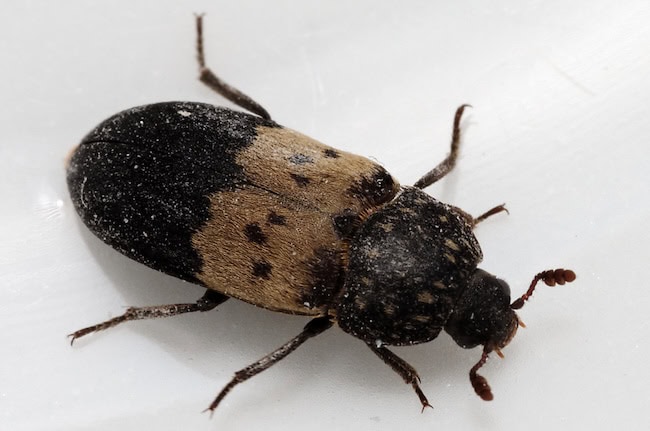
If you’ve ever opened a bag of flour or a box of pasta only to find tiny insects crawling inside, you may have met a larder beetle. These pantry pests are small, oval-shaped beetles, usually dark brown or black with a pale yellow band across their backs. Adults grow to about 1/4 inch long and are easy to spot once you know what to look for.
Larder beetles got their name because they were once a common sight in old-fashioned “larders,” or food storage rooms. Today, they still pop up in kitchens, pantries, and storage areas where dry goods are kept.
How Do Larder Beetles Affect Food and Pantry Storage?
Finding a larder beetle in your pantry can be unsettling. But the bigger concern isn’t the adults–it’s their larvae. Larder beetle larvae burrow into food packaging and can contaminate stored products like:
- Flour and grains
- Pasta, rice, or cereal
- Dried meat, pet food, or cheese
- Stored nuts or seeds
The larvae can chew through cardboard, plastic, and even wood to reach a food source. Over time, an infestation can spread beyond one bag of flour and affect multiple shelves of food. Once they find a food supply, they’ll keep coming back unless you deal with the source.
Are Larder Beetles Harmful?
Larder beetles aren’t directly harmful to people or pets. They don’t bite, sting, or spread disease the way cockroaches or rodents can. Still, they are far from wholesome:
- They contaminate food with droppings and shed skins.
- Their larvae can damage packaging and may even burrow into wooden shelves or cupboards.
- If left unchecked, they can ruin a significant amount of stored food, costing you money and peace of mind.
Quick Guide to Spotting if You Have Larder Beetle Problems
Not sure if what you’re seeing is really a larder beetle problem? Here’s a quick breakdown of the most common signs, what they mean, and the next steps to take:
| What You Might See | What It Usually Means | What to Do Next |
| Adult beetles crawling near windows or lights | Beetles are active indoors and may be looking for food or a place to lay eggs | Check the pantry and storage areas for infested items |
| Hairy, brownish larvae in food packages or cupboards | Infestation is already present in stored food | Seal and throw away infested items; clean shelves thoroughly |
| Shed skins, small holes in boxes or bags | Larvae have been feeding and burrowing in the packaging | Move remaining food into airtight containers |
| Beetles keep showing up even after cleaning | There may be a hidden source (like wall voids, pet food bins, or animal nests) | Call a pest control professional for inspection |
How to Get Rid of Larder Beetles in 5 Steps
Spotting larder beetles in your kitchen can be frustrating, but you don’t have to tackle the problem all at once. You’re sorting out the problem, removing the source, and rebuilding your pantry so pests don’t return.
Here’s a simple 5-step framework on how to get rid of larder beetles:
- Inspect your pantry thoroughly: Start with a thorough top-to-bottom review of your pantry. Open every box and container, especially pet food, grains, pasta, and protein-rich items. Look for:
- Live beetles or hairy larvae
- Small holes in the packaging
- Shed skins or crumbs that look out of place
Don’t forget less obvious areas, like the back corners of shelves, cracks near baseboards, or even behind appliances where stray food can collect.
- Throw out infested food immediately: If you find infested food, resist the urge to “save” it. Seal the package in a plastic bag and throw it straight into your outdoor trash bin.
This also applies to hidden food sources like an old bag of pet food in the garage or even bird or rodent nests if they’re nearby. The faster you remove their food supply, the faster you cut off the infestation.
- Clean your shelves and storage areas: Once the food is cleared, treat your pantry like a reset. Vacuum shelves, cracks, and corners thoroughly, and empty the vacuum outside right away. Then wipe everything down with warm, soapy water to remove crumbs, oils, and food residue.
This isn’t just about removing beetles; it’s about removing what attracts them in the first place.
- Properly seal food and entry points: Now that the space is clean, lock it down. Transfer dry goods into airtight containers made of glass or hard plastic. These containers don’t just stop beetles; they also keep food fresher longer.
While you’re at it, seal any cracks or gaps in shelves, doors, or baseboards that could give beetles a hiding spot.
- Monitor for returning pests: Even after a deep clean, it’s smart to keep watch. Place sticky traps in your pantry or storage areas to monitor for new activity. Regularly check your containers and rotate food so older items get used first.
Important: If you suspect a larger infestation (especially if beetles are showing up in multiple rooms), it’s best to call a pest control professional. Larder beetles are persistent, and a professional can help locate hidden sources you might miss.
When to Call a Pest Control Professional
Most larder beetle problems start in the pantry, and a thorough cleanout often solves the issue. But sometimes DIY steps aren’t enough. If you’ve inspected, tossed, cleaned, and sealed, yet beetles keep coming back, it may be time to call in a professional.
Pest control professionals can:
- Identify whether you’re truly dealing with larder beetles or another pantry pest
- Find hidden sources, such as wall voids, pet food bins, or even animal nests
- Apply targeted treatments that go beyond what’s available at the store
FAQs About How to Get Rid of Larder Beetles
Here are some commonly-asked questions about larder beetles from homeowners.
What causes larder beetles in the house?
The presence of larder beetles in your house is usually caused by easy access to food. They’re especially attracted to stored dry goods, pet food, and protein-rich items like meat or cheese. They may also be drawn to animal byproducts, such as rodent or bird nests. In some cases, adult larder beetles simply fly in from outside and then settle near a reliable food source.
How long do larder beetles live?
An adult larder beetle lives for about two months. During that time, a single female can lay dozens of eggs, which quickly develop into larvae. This short life cycle is one reason infestations can grow faster than many people expect.
Do larder beetles fly?
Yes, adult larder beetles have wings and can fly. Their ability to fly allows them to move between storage areas inside a home, or even enter from outdoors. This mobility makes it important to check not just one shelf, but your entire pantry and nearby spaces.
Can I get rid of larder beetles naturally?
You can often reduce larder beetles naturally by cleaning your pantry, throwing out infested food, vacuuming cracks, and storing food in airtight containers. These steps remove both the beetles and what attracts them. However, if the infestation continues or beetles keep coming back, professional pest control may be necessary to find hidden sources.
Will larder beetles go away on their own?
No, larder beetles rarely go away on their own. As long as food is available, they will keep feeding and breeding. Removing infested food, sealing containers, and cleaning thoroughly are essential to breaking the cycle and stopping the infestation.
Protect Your Pantry from Larder Beetles with Pest Control Experts
Sometimes the toughest part of a larder beetle problem is the source you can’t see. Pest Control Experts can connect you with local pest control professionals who understand how these pests behave and where they like to hide. They’ll work to identify the cause and apply treatments designed to get the situation under control.
Reach out today for a complimentary quote and take the first step toward a cleaner, better-protected pantry.