

If you’ve spotted winged insects flying around your property or coming out of wood, you might be wondering whether you’re dealing with flying ants or termites. While these insects may look similar at first glance, they have distinct characteristics and pose very different risks to your home. Understanding these differences is crucial for determining whether you’re facing a simple nuisance or a potentially costly structural threat.
What are flying ants?
Flying ants aren’t a separate species but rather reproductive members of ant colonies that have developed wings specifically for mating purposes. These winged reproducers, called alates, are young queens and males that emerge from mature colonies during their nuptial flight period.
The flying stage represents a brief but important phase in the ant lifecycle when they leave their original colony to mate and establish new colonies. Common species that produce flying ants include carpenter ants, pavement ants, and odorous house ants. These flights typically occur during specific environmental conditions—often after rainfall on warm, humid days.
Once mating is complete, males die while fertilized queens shed their wings and begin the process of establishing new colonies.
What are termites?
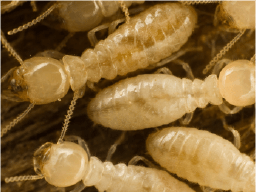
Termites are social insects that feed primarily on cellulose found in wood and other plant materials. They belong to the order Isoptera and are more closely related to cockroaches than to ants. These highly organized insects live in colonies with specialized castes, including workers, soldiers, and reproductives. Unlike the occasional emergence of flying ants, termite colonies continuously produce workers that feed on and damage wood.
The reproductive termites, called alates or swarmers, develop wings and emerge from mature colonies to establish new colonies, similar to flying ants. However, termites pose a significantly greater threat to structures because they consume wood from the inside out, often causing extensive damage before being detected.
What do flying ants look like?
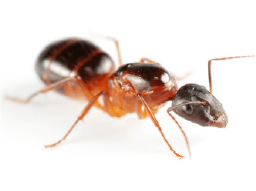
Flying ants have several distinctive physical characteristics that can help identify them. They typically measure between 1/4 to 3/8 inch long, though carpenter ant swarmers can reach 3/4 inch. Their bodies clearly display the ants’ signature three segments—head, thorax, and abdomen—with a pronounced pinched waist (narrow connection) between the thorax and abdomen.
Their antennae are bent or “elbowed” at about a 90-degree angle. Flying ants have two pairs of wings of unequal length, with the front wings noticeably longer than the hind wings. These wings extend well beyond the body and are relatively transparent with visible veins. The wings are less delicate than termite wings and won’t easily break off when handled.
What do termites look like?
Termite swarmers have a distinctly different appearance from flying ants, though the differences can be subtle to the untrained eye. They typically measure 1/4 to 3/8 inch in length with a straight, broad waist—their bodies appear more uniform without the pinched middle section seen in ants. Termites have straight, beaded antennae that resemble tiny strings of pearls, never bent like ants’ antennae.
Their two pairs of wings are equal in length and approximately twice as long as their body. These wings lie flat over their back when at rest and have a milky or translucent appearance. Termite wings are extremely delicate and easily detached, which is why discarded wings near windowsills or light fixtures are often one of the first signs of termite activity.
What are some main differences between flying ants and termites?
The most reliable differences between flying ants and termites are in their physical characteristics. Ants have a clearly pinched waist, while termites have a broad, straight waist. Ant antennae are bent or “elbowed,” while termite antennae are straight and beaded. Wing configuration is another key difference—ants have unequal-length wings with the front pair larger than the back pair, while termites have four wings of equal length that are proportionally longer relative to their body size.
Behaviorally, flying ants are often more active during daylight, while termite swarmers typically emerge during dawn or dusk, often after rainfall. Additionally, flying ants may be attracted to various food sources, while termites show no interest in food outside their wooden nests.
What are more dangerous: flying ants or termites?
Termites pose a significantly greater risk to structures than flying ants. Termites feed continuously on wood, causing structural damage that costs U.S. property owners over $5 billion annually in damage and treatment. They work silently and can go undetected for years while hollowing out wooden structures from the inside. By the time swarmers appear, the colony is usually well-established and has potentially caused extensive damage.
Flying ants, while sometimes alarming in large numbers, typically represent a brief reproductive phase rather than an ongoing threat. Most ant species don’t damage wood structurally, with carpenter ants being the exception. Even carpenter ants don’t eat wood but rather excavate it to create nests, and they typically target already-damaged or moisture-compromised wood. Their damage occurs much more slowly than termite damage and is usually more visible.
Additionally, the financial implications differ dramatically—termite damage is rarely covered by homeowner’s insurance, often leaving homeowners responsible for both repair costs and treatment expenses. While neither insect typically poses direct health threats to humans, termites clearly represent the more serious economic and structural concern.
Lifecycle of a flying ant
Flying ants represent just one phase in the ant lifecycle, specifically the reproductive alates from mature colonies. The cycle begins when established colonies produce winged reproductives, typically in spring or early summer. These winged ants remain in the nest until environmental conditions trigger a synchronized emergence—usually warm, humid days often following rainfall. During their nuptial flight, males and virgin queens mate in the air.
After mating, males die within a few days, having fulfilled their sole purpose. Fertilized queens land, break off their wings (leaving visible wing stubs), and seek suitable locations to establish new colonies. The queen then lays her first batch of eggs, which develop into workers.
These first workers take over colony maintenance, allowing the queen to focus exclusively on egg production. The colony gradually expands over several years before producing its own flying reproductives, completing the cycle.
Lifecycle of a termite
Termites develop through incomplete metamorphosis with three main stages: egg, nymph, and adult. Mature colonies produce winged reproductive termites (alates) that emerge during favorable conditions for their nuptial flights. After a brief flight, males and females pair up, shed their wings, and seek suitable locations with wood and soil contact to establish new colonies.
The new king and queen create a small chamber where the queen begins laying eggs. Unlike ants, both king and queen termites remain together throughout their lives, with the king continuing to mate with the queen periodically. Initial eggs develop into worker termites that expand the nest and forage for food.
As the colony matures, it produces specialized castes including soldiers and supplementary reproductives. A single termite queen can live up to 30 years, producing thousands of eggs annually. Under favorable conditions, colonies reach maturity in 3-5 years and begin producing their own winged reproductives to start the cycle again.
How to know if you have a flying ant infestation
Flying ants themselves don’t necessarily indicate an infestation—they’re a natural part of the ant lifecycle and often appear briefly before disappearing. However, their presence can signal an established colony nearby. Look for patterns in flying ant appearances–if they consistently emerge from the same area of your home, a colony may be nesting there.
For carpenter ants specifically, watch for small piles of wood shavings (frass) that resemble sawdust, often containing insect body parts. These typically appear near baseboards, window sills, or door frames.
Check dark, moist areas of your home, as many ant species prefer these conditions. Common nesting locations include wall voids, around bathtubs and sinks, near dishwashers, under floors, and in crawl spaces. You might notice worker ants traveling along well-defined trails between food sources and their nest. Unlike termites, ants keep their nests clean, so visible frass outside of small holes in wood can indicate carpenter ant activity.
If you find discarded wings, examine them carefully—ant wings have unequal lengths and are more durable than termite wings. Regular sightings of wingless ants throughout your home, especially in kitchens and bathrooms, may indicate established colonies.
How to know if you have a termite infestation
Termite infestations often go undetected until significant damage has occurred, making early identification crucial. The most obvious sign is the presence of swarmers (winged reproductive termites) inside your home, typically emerging near windows, doors, or light fixtures.
After swarming, these termites shed their wings, so piles of discarded wings—especially around windowsills—are a significant warning sign. These wings are equal in length, translucent, and much more delicate than ant wings.
Look for mud tubes about the width of a pencil running along foundations, walls, or support beams, especially in crawl spaces and basements. These tubes serve as protected highways for termites traveling between their colony and food sources.
Wood damage is another key indicator—termite-damaged wood sounds hollow when tapped and may have a honeycomb appearance inside without visible surface damage. Unlike carpenter ants, termites don’t produce visible frass piles outside their tunnels.
Other signs include doors or windows that suddenly become difficult to open, sagging floors or ceilings, bubbling or uneven paint, and tiny holes in drywall or wallpaper. Regular inspection of your home’s foundation, especially where wood contacts soil, can help catch termite activity before extensive damage occurs.
Do you get rid of flying ants and termites the same way?
Flying ants and termites require fundamentally different treatment approaches due to their distinct behaviors and colony structures. Flying ants are typically addressed by targeting the parent colony, which might involve treating specific nesting sites and using baits that workers carry back to the colony. Termite control, however, typically requires comprehensive treatment of the soil around foundations, trenching, drilling, and sometimes fumigation to reach the extensive underground colonies.
While DIY products exist for both pests, professional pest control services offer the most effective solutions, especially for termites. Professionals have the training to accurately identify the specific ant or termite species and implement appropriate control strategies. They have access to commercial-grade products and specialized equipment for applying treatments effectively.
Additionally, termite control often requires specialized knowledge of building construction to locate and treat all potential entry points and damaged areas.
How to prevent a flying ant infestation
Preventing flying ant problems starts with making your property less attractive to the wingless worker ants that comprise most of the colony. Eliminate food sources by keeping kitchen areas clean, storing food in sealed containers, and promptly cleaning up spills. Reduce available water by fixing leaky pipes and ensuring proper drainage around your home’s foundation.
Make sure to trim trees and shrubs away from your home to eliminate bridges that ants might use to access your structure. Maintain at least a six-inch gap between soil and wooden structural elements, and replace any water-damaged or decaying wood promptly, as this particularly attracts carpenter ants.
Seal potential entry points around your home’s exterior, including cracks in the foundation, gaps around windows and doors, and openings where utility lines enter. Apply caulk to small gaps and use weather stripping around doors and windows. For carpenter ants specifically, keep firewood elevated and away from your home’s exterior, and remove dead tree stumps or logs from your property.
Regular inspection of dark, moist areas like bathrooms, kitchens, basements, and crawl spaces can help catch ant activity before colonies become firmly established.
How to prevent a termite infestation
Preventing termite infestations focuses primarily on eliminating conditions that attract them to your property. First, reduce wood-to-soil contact around your home by ensuring at least a 6-inch clearance between wooden elements and the ground. This includes siding, door frames, and window frames. Store firewood, lumber, and other wood products elevated off the ground and away from your home’s foundation.
Control moisture around your property by maintaining proper drainage, repairing leaky pipes promptly, and ensuring gutters and downspouts direct water away from your foundation. Use proper ventilation in crawl spaces and basements to reduce humidity that attracts termites. Consider installing physical barriers like stainless steel mesh or sand barriers during construction or renovation projects.
Regular professional inspections are crucial, as termites can be difficult for homeowners to detect. Schedule annual termite inspections, especially if you live in high-risk areas. During landscaping or gardening activities, be careful not to disturb or damage existing termite treatments around your foundation.
When building or renovating, consider using treated woods or termite-resistant materials, particularly for structures in contact with soil. Pre-treatment of soil during construction provides the best long-term protection against subterranean termites.
When to Call a Professional
If you’re seeing winged insects in your home and aren’t sure whether they’re flying ants or termites, contact our partners associated with Pest Control Experts today for a free quote and proper identification! Our experts will determine exactly which pest you’re dealing with and implement targeted control methods to protect your home from potential damage.