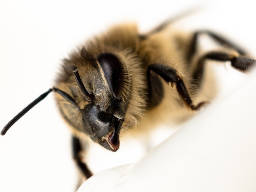

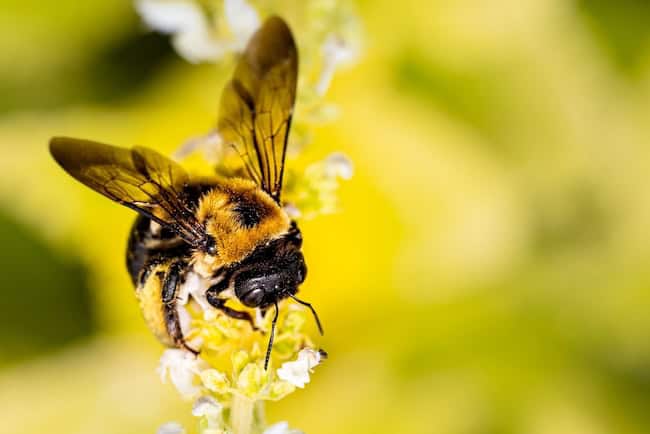
Carpenter bees (Xylocopa species) are large, solitary bees that bore into unpainted or weathered wood to build nests. They look intimidating, but they rarely cause serious harm. Their tunneling can damage wooden structures over time, though. Knowing how to identify them, where they nest, and how to protect exposed wood helps homeowners limit damage while leaving the bees alone when possible.
What are carpenter bees?
Carpenter bees are solitary wood-nesting bees that excavate round tunnels in dead or untreated wood to lay eggs and provision their young with pollen and nectar. Unlike honey bees and bumble bees, most carpenter bees do not live in large colonies. Each female builds her own nest, though several females may use the same wood block over multiple years.
The eastern carpenter bee (Xylocopa virginica) is the most common species in the eastern United States, while the Southern carpenter bee is widespread in warmer southern regions.
Carpenter bees are important pollinators for many plants, including tomatoes, blueberries, and passionflower. They visit flowers during warm months and are most active in spring and early summer. Their nesting habits, rather than their feeding habits, are what bring them into conflict with homeowners.
What do carpenter bees look like?
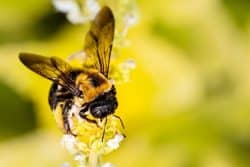
Carpenter bees are large, robust bees measuring about 1/2 to 1 inch long, with a shiny, mostly black abdomen and a dense covering of hair on the thorax. Females have a completely black abdomen with a glossy, hairless surface, which helps distinguish them from bumble bees. The thorax of both sexes is often yellow, orange, or black, depending on the species. Males have a pale yellow or white patch on the face, which is a useful identifying feature.
Their bodies are heavier than most small bees, and they move with a loud, buzzing flight. Males often hover near nest entrances, making them look aggressive, but they lack stingers. Females carry a stinger but rarely use it unless they are handled.
What are the differences between carpenter bees and other types of bees?
Carpenter bees differ from bumble bees and honey bees in nesting behavior, body shape, and social structure, with the most important difference being that carpenter bees bore into wood instead of nesting in colonies. Bumble bees are fuzzy overall, including the abdomen, and typically nest in the ground, grass tufts, or abandoned rodent burrows. Honey bees are smaller, golden-brown, and live in large colonies that build wax comb inside cavities.
Carpenter bees have a shiny, hairless abdomen, while bumble bees have a fuzzy abdomen with yellow and black bands. Carpenter bees create perfectly round entry holes about 1/2 inch wide in wood, while bumble bees and honey bees do not excavate wood. Identifying the bee by its nest location and body features helps determine whether it poses a structural concern.
Are carpenter bees dangerous?
Carpenter bees are not considered dangerous, since males cannot sting and females rarely sting unless they are handled or trapped. Most stings occur when people accidentally grab or squeeze a bee. The sting is painful but usually causes only localized swelling that resolves within a day. People with severe allergies to insect stings should take caution and seek medical care for any serious reaction.
The main concern is structural. Repeated nesting in wooden fascia, decks, eaves, and siding can weaken wood over time, particularly when many generations reuse the same tunnels. Woodpeckers sometimes feed on carpenter bee larvae, which can cause additional damage to exterior wood.
Where are carpenter bees most commonly found?
Carpenter bees are most common in areas with exposed, unpainted wood throughout the eastern and southern United States, where activity can last much of the year. They target softwoods such as pine, cedar, and redwood, along with weathered wood on decks, fences, pergolas, and porch ceilings. Eaves, fascia boards, window trim, and wooden play structures are common nesting sites. Bees usually return to the same nesting areas each year, making repeated holes a sign of an established nest.
How to prevent a carpenter bee infestation
Preventing carpenter bees focuses on protecting exposed wood and removing attractive nesting sites:
- Paint or stain wood: Coat all exposed wood with paint, varnish, or stain, since carpenter bees rarely bore into finished surfaces.
- Treat unfinished wood: Apply a protective finish to decks, fences, and trim before bees begin nesting.
- Fill old holes: Seal existing entry holes with wood filler or caulk after the bees have left in the fall or spring.
- Use hardwood or composite materials: Choose hardwood, composite, or vinyl for areas where bees have repeatedly nested.
- Install barriers: Cover fascia and exposed beams with metal flashing or hardware cloth to block nesting access.
- Hang decoys: Consider placing wooden blocks in areas bees are likely to use, though results vary.
When to know if you have a carpenter bee infestation
Several signs suggest that carpenter bees have established nests on your property:
- Round holes in wood: Perfectly round holes about 1/2 inch wide on fascia, decks, or siding indicate active nesting.
- Sawdust piles: Small mounds of coarse sawdust beneath holes or on porch floors show recent excavation.
- Yellow stains: Yellowish streaks near entry holes can come from fecal material as bees move in and out of tunnels.
- Hovering males: Bees hovering near wood structures and buzzing at people often indicate nesting nearby.
- Repeat activity each spring: Bees returning to the same wood each year suggest a stable, long-term nesting site.
- Damaged wood: Soft or crumbling wood near holes may indicate extensive tunneling and warrants professional assessment.
When to call a professional
Discovering one carpenter bee doesn’t necessarily mean an infestation. But repeated round holes in fascia or decking, sawdust piles below wood, or males hovering near eaves suggest established nests requiring professional assessment. This is when to call a local pest expert.
DIY methods like painting wood, filling old holes, and hanging decoys reduce nesting sites. But they often miss active tunnels already carved into beams and deck boards. They don’t address the root causes drawing carpenter bees to your property, such as unpainted softwood, weathered trim, and repeat nesting sites. Filling holes provides temporary relief without fixing underlying problems. This allows females to keep excavating new tunnels and returning to the same wood each spring.
A professional pest control service, like Aptive or Terminix, can help confirm whether you have eastern carpenter bees, Southern carpenter bees, or another wood-boring species. They assess exposed wood around your home, including decks, fascia, eaves, and porch ceilings. They locate active nests and damaged wood that may need repair. They provide comprehensive treatment combining targeted nest treatment, wood protection, exclusion barriers, and ongoing monitoring to reduce nesting and protect your structures from further damage.
FAQs about carpenter bees
Here are some frequently-asked questions about carpenter bees and how they can affect homeowners.
A: Carpenter bees do not bite in the usual sense, but females may use their mandibles to chew when handled. They are not aggressive and typically avoid people. Bites are rare and cause only minor irritation. Most contact happens when someone accidentally grabs or traps a bee against their skin.
A: Only female carpenter bees can sting, and they rarely do so unless handled or trapped. Males have no stinger and often hover near nests without any threat. A sting is painful but usually causes localized swelling that fades within a day. Seek medical care if a sting triggers a severe allergic reaction.
A: Traps can capture some carpenter bees, but they rarely solve an established nesting problem. Bee traps catch foragers and some males, yet mated females continue excavating new tunnels in nearby wood. Traps work best as a supplement to wood protection, hole sealing, and professional nest treatment that addresses the females creating new galleries.