
Few things make a homeowner leap off the couch faster than a multi-legged critter darting across the floorboards at full speed. Centipedes and millipedes are among the most visually alarming pests that find their way indoors—all those legs moving in coordinated waves tend to short-circuit the rational part of the brain.
Here’s the thing, though: neither one is actually out to get you. Centipedes are useful predators that hunt insects and other arthropods. Millipedes are quiet composters that break down decaying organic matter in the soil. They don’t cause structural damage, they don’t infest food, and they don’t reproduce indoors in any meaningful way. But understanding why they show up inside—and how to make them stop—can save you from a lot of unnecessary panic and wasted pest control products.
Centipedes vs. Millipedes: Knowing the Difference
Homeowners tend to lump these two together, but they belong to entirely different arthropod classes with different diets, behaviors, and body structures. Telling them apart matters because the control approach shifts depending on which one you’re dealing with.
| Trait | House Centipedes | Millipedes |
| Leg Count | 1 pair per body segment (long, thread-like legs) | 2 pairs per body segment (short, stubby legs) |
| Movement | Fast, darting, unpredictable zig-zag | Slow, deliberate, steady crawl |
| Diet | Carnivorous — hunts insects, spiders, and small arthropods | Scavenger — feeds on decaying plant matter |
| Defense | Runs or uses venomous front claws on prey | Curls into a tight coil and secretes a foul-smelling fluid |
| Exoskeleton | Soft, flexible body | Hard, rounded, armored segments |
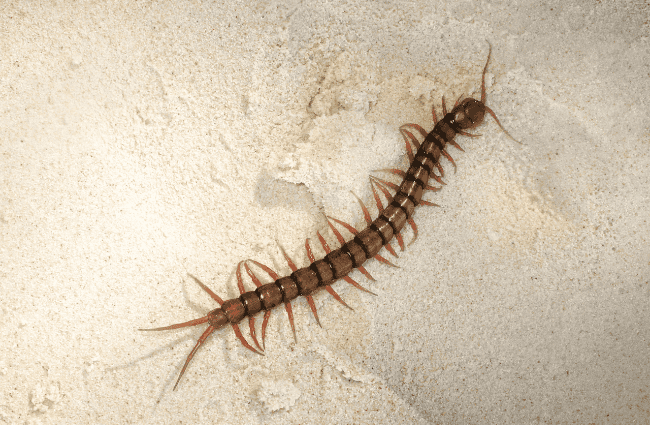
The easiest field test: if it’s fast, flat, and terrifying, it’s a centipede. If it’s slow, round, and curled up in a ball, it’s a millipede.
Biology and Behavior
Understanding what drives these arthropods helps explain why they end up inside and — more importantly — why spraying them rarely solves the problem.
House Centipedes
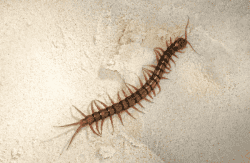
The house centipede (Scutigera coleoptrata) is the species you’re most likely to encounter indoors. Adults are about one to one-and-a-half inches long with 15 pairs of distinctively long, banded legs that give them their signature unsettling silhouette. They’re fast—capable of covering more than a foot per second—and exclusively nocturnal, which is why encounters tend to happen during late-night bathroom trips.
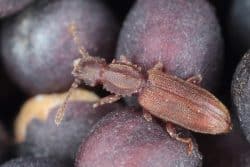
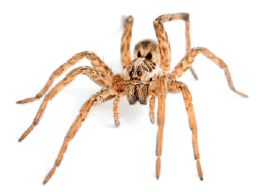
What most homeowners don’t realize is that house centipedes are beneficial predators. They actively hunt cockroaches, silverfish, carpet beetle larvae, spiders, and other small household pests. A centipede in your basement isn’t just lost—it’s there because it found a food supply. That detail is the key to understanding why they keep showing up: the centipede is the symptom, not the disease.
Millipedes
Millipedes are detritivores—they feed on decaying leaves, wood, and other organic matter in the soil. They’re slow-moving, docile, and completely uninterested in anything inside your home. Unlike centipedes, they aren’t following prey indoors. They’re following moisture.
Millipede migrations are usually weather-driven. After heavy rain saturates the soil, or during extreme heat that dries out their habitat, millipedes move en masse toward the nearest moisture source—and your foundation often qualifies.
In severe cases, homeowners report hundreds of millipedes clustered around basement walls, garage floors, and sliding glass door tracks in a single night. It looks alarming, but it’s a temporary displacement event, not a breeding infestation. Millipedes can’t reproduce indoors—they need soil and decaying organic material that your house doesn’t provide.
Why They End Up Inside
Centipedes and millipedes are outdoor organisms that prefer damp, cool, sheltered environments—leaf piles, mulch beds, rotting logs, and the underside of landscape stones. When they cross your threshold, it almost always comes down to two factors.
Moisture
Both groups are highly moisture-dependent. Centipedes breathe through openings along their body that lose water rapidly in dry air, and millipedes lack a waxy cuticle layer, making them even more vulnerable to desiccation. Basements, crawl spaces, bathrooms, and laundry rooms offer the humidity they need to survive. If your home has persistent dampness in any of these areas, you’re rolling out the welcome mat.
Entry Points
Neither pest is breaking in with intent—they’re wandering through gaps that already exist. Foundation cracks, unsealed utility penetrations, gaps beneath exterior doors, damaged weatherstripping, and basement window frames are all common routes. Millipedes in particular tend to accumulate against foundations in large numbers during migration events, and even a small gap gives them access.
Are Centipedes and Millipedes Dangerous?
The short answer is no. Neither pest poses a significant medical threat or damages property.
Centipedes do possess modified front legs that function as venom-injecting claws—technically called forcipules. However, house centipedes rarely bite humans and do so only in self-defense. On the rare occasion a large specimen pinches someone, the result is minor, localized irritation comparable to a mild bee sting. It’s uncomfortable, not dangerous.
Millipedes don’t bite or sting at all. When threatened or crushed, some species secrete a defensive fluid that can irritate sensitive skin or eyes and leave a temporary brownish stain on surfaces. The fluid contains hydrogen cyanide compounds in some species, but in quantities far too small to pose any real health risk to humans or pets.
How to Get Rid of Centipedes and Millipedes
Effective control relies on environmental management—not chemical spraying. These pests are indoors because conditions are allowing it, and those conditions are what need to change.
Eliminate Excess Indoor Moisture
This is the single most impactful step. Run dehumidifiers in damp basements and crawl spaces to keep humidity below 50%. Fix leaky pipes under sinks, ensure bathroom exhaust fans are actually venting to the exterior, and check that laundry rooms and crawl spaces have adequate ventilation. Reduce the moisture, and you remove the primary reason either pest stays indoors.
Seal Exterior Entry Points
Inspect the full exterior perimeter. Use silicone caulk or expanding foam to seal gaps around basement windows, utility pipe penetrations, and expansion joints in the foundation. Replace worn door sweeps on every exterior door—particularly garage doors and sliding glass doors, which are common millipede entry points. Screen foundation vents with fine mesh.
Clear Outdoor Harborage
Create a 12-to-18-inch vegetation-free border around your home’s foundation. Pull back thick wood mulch, rake away damp leaf litter, and relocate firewood piles, landscape stones, and dense ground cover at least 10 feet from the house. This buffer zone eliminates the moist, sheltered habitat that concentrates these arthropods right next to your walls.
Address the Food Web
This step applies specifically to centipedes. If house centipedes keep appearing, it’s because they’re finding prey—silverfish, carpet beetles, cockroaches, spiders, or other small insects living in the same damp spaces. Resolve the underlying pest issues, and the centipedes lose their reason to stay. Sticky monitors placed in dark corners and along basement walls are an effective way to identify what else is living down there.
Why Spraying Doesn’t Work
This is the most common waste of money in centipede and millipede control: grabbing a bottle of liquid insecticide and blasting the baseboards.
Spraying liquid insecticides along baseboards for house centipedes is largely pointless. Unlike beetles or ants whose bodies drag across treated surfaces, centipedes walk on tall, spindly, thread-like legs—very little of their body ever contacts the dried chemical residue on the floor. Millipedes have thick, rounded exoskeletons that limit chemical absorption from brief surface contact.
When you spray, you’re not fixing the problem. You’re adding pesticide to a room while leaving the damp environment and the hidden silverfish colony completely intact. The centipedes you kill will be replaced by new ones following the same prey trail within weeks. If you want them gone, turn down the humidity, fix the door sweeps, and eliminate their food supply. The spray is treating the smoke, not the fire.
When to Call a Professional
Most centipede and millipede problems resolve once you address moisture and entry points. But if you’re dealing with recurring appearances despite environmental corrections—or if a millipede migration event is pushing hundreds of individuals through your foundation walls—a licensed pest management professional can help.
A professional can perform a comprehensive perimeter evaluation, identify hidden moisture issues or insect colonies sustaining centipede populations, and apply targeted micro-encapsulated treatments to exterior harborage zones that keep outdoor crawlers where they belong. If the problem has moved past what dehumidifiers and caulk can handle, professional intervention gets to the root faster and more safely than anything on the hardware store shelf.
Pest Control Experts connect homeowners with trusted local professionals—including Terminix and Aptive—who can diagnose persistent centipede and millipede issues and build a control plan around the conditions driving them. Contact Pest Control Experts for a free quote and schedule your home inspection today.