
Key Takeaways
- Not every fly found indoors is a true house fly. Common indoor species include house flies, cluster flies, fruit flies, drain flies, blow flies, flesh flies, and seasonal or picture-winged flies.
- You can often identify the type of fly by its size, coloring, movement, and location. For example, fruit flies gather near food, while fuzzy drain flies typically appear around sinks and showers.
- House flies, blow flies, and flesh flies may be associated with garbage, waste, or decaying organic material, while cluster and seasonal flies usually enter homes for shelter.
- Recurring fly activity often means a breeding or attraction source remains, such as drain buildup, food residue, trash, excess moisture, or hidden decay.
- Consider contacting a pest control professional when flies persist after cleaning or appear in large numbers, wall voids, plumbing areas, attics, or other hard-to-reach spaces.
Flies inside your home are more than just an annoyance. While some species are relatively harmless nuisances, others are closely associated with waste, decaying organic material, and surface contamination. Knowing the types of house flies you’re dealing with can help you understand why they’re showing up and when it may be time to seek a pest control professional.
Below, we break down the 7 different types of house flies commonly found indoors across the U.S., how to tell them apart, and what their presence means for your home.
What Is Considered a “House Fly”?
The term “house fly” is often used broadly to describe any fly found indoors. Technically, the common house fly (Musca domestica) is just one species among many that regularly enter homes.
House flies and similar indoor flies belong to the insect order Diptera, meaning they have one pair of wings and go through 4 life stages: egg, larva (maggot), pupa, and adult. These flies are typically drawn to food scraps, trash, moisture, and organic matter – which is why kitchens, garbage areas, and bathrooms are common hotspots.
7 Different Types of House Flies
Not all flies you see indoors are the same. Below is a simple overview of the 7 different kinds of house flies.
| Fly Type | Size | Common Location | Key Identifier |
| Common House Fly | Medium | Kitchens and trash areas | Gray body with dark stripes |
| Cluster Fly | Medium to large | Attics and windows | Slow-moving, clusters in cooler months |
| Fruit Fly | Very small | Kitchens and drains | Tan body with red eyes |
| Drain Fly | Very small | Sinks and showers | Fuzzy, moth-like wings |
| Blow Fly | Large | Trash and wall voids | Metallic blue or green |
| Flesh Fly | Large | Near decay sources | Gray with dark stripes |
| Seasonal Flies | Varies | Windows | Appear during seasonal changes |
1. Common House Fly (Musca domestica)
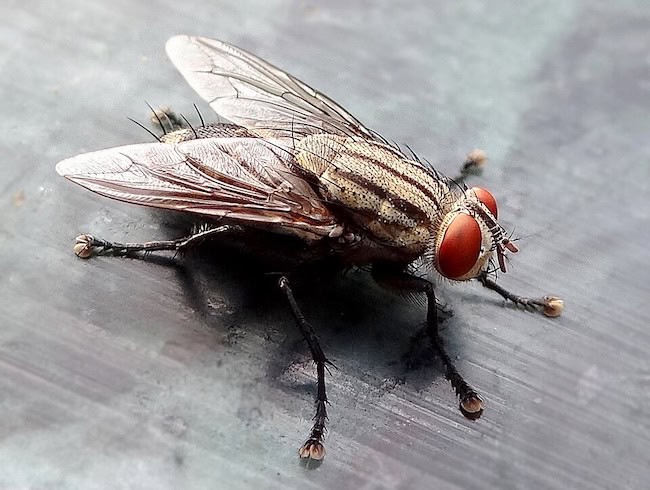
The common house fly is the most recognizable indoor fly. Adults are gray, about 1/8 to 1/4 inch long, with 4 dark stripes on the thorax and red compound eyes.
House flies feed using sponge-like mouthparts and are attracted to food, garbage, and organic waste. While they don’t bite, they often land on unsanitary surfaces and can transfer bacteria to food-preparation areas.
2. Cluster Flies
Cluster flies look similar to house flies but are slightly larger and darker, with golden hairs on their thorax. They are most noticeable in the cooler months, when they enter homes in search of warmth.
Unlike common house flies, cluster flies do not breed indoors and are not attracted to garbage. Instead, they often gather in wall voids, attics, and window areas, sometimes appearing in large numbers.
3. Fruit Flies
Fruit flies are tiny flies with tan bodies and bright red eyes. They are strongly attracted to fermenting fruits, vegetables, sugary liquids, and residue in drains or recycling bins.
Fruit flies reproduce quickly when breeding sources are available, which is why small problems can escalate rapidly. Fruit flies are more of a nuisance than a health threat, but persistent activity usually means a hidden food source is present.
4. Drain Flies (Moth Flies)
Drain flies are tiny, fuzzy flies with wings that give them a moth-like appearance. They’re most commonly found near sinks, tubs, showers, and floor drains, especially in areas with consistent moisture.
Rather than breeding in standing water, drain flies develop in the organic buildup that forms inside drain pipes. This buildup can include food residue, soap scum, and other organic material.
While drain flies don’t bite and aren’t known to cause harm, their presence may point to maintenance or plumbing issues that allow organic material to accumulate over time.
5. Blow Flies (Bluebottle and Greenbottle Flies)
Blow flies are large flies with metallic blue, green, or copper coloring. They are attracted to decaying organic matter, garbage, and animal remains.
Seeing blow flies indoors may indicate a nearby food source such as trash, spoiled food, or a deceased rodent in wall voids or attics. These flies don’t bite, but they’re associated with unsanitary conditions because they breed and feed in such places.
6. Flesh Flies
Flesh flies are similar in size to blow flies but usually have gray bodies with darker striping across the thorax and abdomen. One unique trait of many flesh fly species is that they deposit live larvae rather than lay eggs.
These flies are drawn to decaying organic material, and indoor sightings may suggest that something nearby is providing an attractive breeding environment. Flesh flies are often seen resting on surfaces rather than actively buzzing around rooms.
7. Seasonal and Picture-Winged Flies
Some flies enter homes primarily during certain times of the year, especially in the fall. Picture-winged flies and other seasonal species are often drawn indoors as outdoor temperatures change.
They usually gather near windows, doors, and light sources and typically don’t reproduce inside homes. While they may appear suddenly and in noticeable numbers, their presence is often temporary. Seasonal fly activity is commonly linked to environmental changes rather than indoor sanitation issues.
When to Call a Pest Control Professional
Small, isolated fly issues may sometimes improve by removing breeding sources and improving sanitation. However, ongoing or widespread fly activity often points to hidden issues that aren’t easy to locate. If you’ve cleaned, dried, and decluttered but still see repeated activity, it may be time to call a professional.
Pest control professionals have the training to identify the exact fly species, locate hidden breeding sites, and apply targeted treatments in areas that are reasonably accessible. This can be especially helpful when flies are found in wall voids, plumbing systems, or other hard-to-reach areas.
Frequently Asked Questions About Different Kinds of House Flies
Here are some commonly-asked questions about the different types of flies you can find in your home.
A: When flies continue to show up after routine cleaning, it usually means the source hasn’t been fully addressed. Flies are often attracted to things that aren’t immediately obvious, such as residue inside trash bins, buildup in drains, outdoor waste near entry points, or organic material hidden in wall voids or crawl spaces.
A: Some fly species may develop near hidden organic material inside wall voids, attics, or ceilings. This can happen if there’s a food source present, such as decaying matter that isn’t easily visible from living spaces.
A: Not always. While fruit flies are common indoors, they aren’t the only small flies found in homes. Drain flies and lesser house flies are also small and frequently mistaken for fruit flies. The key difference is where they’re found.
Fruit flies are usually found around food and recycling, while drain flies tend to hang out near sinks and showers. Correct identification is important for understanding what’s attracting them in the first place.
A: Some flies are more common during warmer months, while others, like cluster flies, are more noticeable in cooler seasons. Indoor fly activity can vary throughout the year depending on weather, temperature changes, and available shelter.
Protect Your Home from Different Kinds of House Flies with Pest Control Experts
Recurring fly activity can be frustrating, especially when the source isn’t obvious. When flies continue to appear indoors, it often points to conditions that aren’t easy to spot without experience.
Pest Control Experts help connect homeowners with local pest control professionals who understand common fly behaviors and know where to look for contributing factors. Get a complimentary quote to explore your next steps and move closer to enjoying your home again.