
Houston homeowners know that the city’s warm, humid weather can stick around for much of the year. Add frequent rainfall, moisture-rich soil, bayous, drainage systems, and dense residential landscaping, and it’s easy to see why common pests in Houston, Texas may seek favorable environments around local homes.
Whether you live in a classic bungalow in The Heights, a suburban home in Sugar Land, or a master-planned community in Katy, your home may still encounter ants, cockroaches, and more. Read on to explore how Houston’s climate attracts pests, learn about the top seven pests affecting local homes, and find out when to call professional pest control in Houston, Texas.
Why Houston’s Environment Creates Favorable Conditions for Year-Round Pest Activity
Houston’s humid subtropical climate, mild winters, and frequent rainfall allow many pests to stay active for much of the year. With deep freezes being uncommon, some species may remain active and reproduce through the winter months.
The city’s unique soil composition plays a major role in pest movement. Houston sits on heavy expansion clay, often referred to as Houston black clay, that shrinks and cracks during hot, dry spells and swells when wet. These deep soil fissures may create natural underground pathways for some common pests in Houston, Texas, to navigate and shelter underground.
Houston’s low elevation and extensive network of bayous, ditches, and drainage systems further compound local pest pressure. During heavy downpours and tropical rain events, these low-lying areas can accumulate significant amounts of water. Saturated soil may also encourage some ground-dwelling pests to move toward drier areas.
Why Homes Attract Common Pests in Houston, Texas
Houston, Texas homes have several structural and environmental features that can make them easier for pests to access and shelter in. Key vulnerabilities include:
- Slab-on-grade foundations: Many Houston-area homes are built on concrete slabs, placing the structure directly above or alongside the surrounding soil. Cracks, foundation gaps, and openings around utility lines may provide access areas for ground-dwelling pests.
- Brick veneer weep holes: Brick veneer systems use weep holes to let moisture escape and drain away from the wall. These openings are a normal part of masonry construction, but damaged, improperly screened, or poorly detailed areas may create potential entry points for common pests in Houston, Texas.
- Roofline and siding bridges: Pine trees, mature live oaks, and dense landscaping are common around Houston homes. When branches, vines, or vegetation touch the roof, fascia, or siding, they may provide pathways to the structure.
The 7 Most Common Pests in Houston, Texas
Common pests in Houston, TX, may be more manageable when you know what attracts them to your home and how to prevent them. Let’s see them below:
1. Mosquitoes
Houston’s extensive network of bayous and waterways, combined with its warm climate, may contribute to mosquito activity for much of the year. Heavy clay soils in parts of the region may also slow drainage, allowing rainwater to collect in some yards after storms.
Species like the Asian tiger mosquito, with its dark body and white stripes, and the southern house mosquito, with its dull golden-brown body and unbanded legs, may be encountered in Houston. During the city’s hot summer months, their four-stage life cycle may progress from egg to adult in as little as 7 to 10 days.
Here’s what to know:
- Primary attractants: Standing water in clogged gutters, plant saucers, and French drains, as well as dense shade, humid foliage, carbon dioxide, body heat, and sweat.
- Where they enter or gather: Stagnant water in yards and drainage areas, rest beneath broadleaf shrubs, in patio corners, and in tall grass, and enter homes through torn screens, unscreened doors, and open garage bays.
- Signs of activity: High-pitched buzzing near the ears, itchy red bites, swarms hovering around vegetation or water, and mosquito larvae moving in stagnant water.
- Prevention tip: Regularly remove standing water from outdoor containers, unclog gutters, and clear drain pans. Keeping yard foliage trimmed may also reduce shaded areas where mosquitoes rest.
2. American Cockroaches
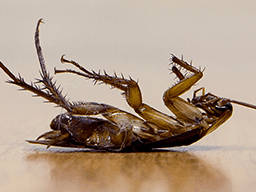
Often referred to locally as “Palmetto bugs” or “water bugs,” American cockroaches are among the larger roach species that Houston homeowners may encounter. They can grow to around 2 inches long and are typically reddish-brown with a lighter-colored outline behind the head.
Unlike smaller roaches, American cockroaches have fully developed wings and may fly short distances on warm, humid nights. They are often found outdoors in places such as tree hollows, pine straw, and utility areas but can slip inside through small openings while looking for food and moisture. Here’s what to watch for:
- Primary attractants: Municipal sewer systems, rotting hardwood mulch, decomposing fallen fruit, and warm, dark areas with persistent moisture.
- Where they enter or gather: Exterior brick weep holes, crawlspace foundation vents, floor drains, main sewer connections, and gaps around air-conditioning pipes.
- Signs of activity: Occasional nighttime sightings, smooth cylindrical droppings with blunt ends and ridged sides, and dark, capsule-shaped egg cases hidden in protected corners.
- Prevention tip: Seal utility openings with expansion foam or silicone caulk, install tight-fitting weatherstripping on all exterior doors, and use a dehumidifier in damp lower-level spaces to help reduce excess humidity.
3. Fire Ants
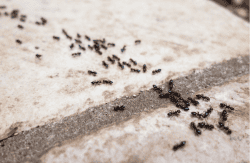
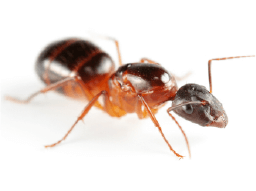
Red imported fire ants are small, copper-colored to reddish-brown ants that are common across Greater Houston and deliver painful, venomous stings that may develop into itchy, fluid-filled pustules.
During heavy Gulf Coast storms and bayou flooding, fire ant colonies may survive rising water by forming floating “rafts” made up of thousands of ants linked together. These rafts can drift until they reach dry ground. On land, fire ants typically create dome-shaped mounds without a visible central opening, with underground tunnels that can extend well beyond the mound.
If fire ant colonies are becoming a recurring problem around frequently used areas, a professional pest service may be appropriate. Here’s what to know:
- Primary attractants: Open, sun-exposed turfgrass, moist soil, protein sources (dead insects, oil-rich seeds), sugary honeydew, pet food left outdoors, and greasy food crumbs.
- Where they enter or gather: Mounded soil structures across open lawn spaces, beneath concrete driveway expansion joints, inside air conditioner contactor enclosures, and along sidewalk edges.
- Signs of activity: Visible dome-shaped dirt mounds with no central entrance hole, sudden swarms appearing when soil is disturbed, reddish-brown ants moving rapidly in trails, and winged reproductive ants swarming during warm spring mornings.
- Prevention tip: Reduce excess moisture around your yard and keep food scraps and pet food contained. Avoid disturbing active fire ant mounds, and consider professional pest control for established colonies.
4. German Cockroaches
Unlike American cockroaches, German cockroaches are indoor pests that rely entirely on human structures to survive. Measuring just 1/2 to 5/8 of an inch, they are far smaller than American roaches and easily recognized by their light tan color and two dark parallel stripes behind their head.
In Houston’s high humidity, German cockroach infestations may grow quickly. A single egg capsule (ootheca) may contain up to 40 eggs, and females typically carry it until shortly before the eggs hatch. They may also develop high resistance to some over-the-counter treatments, so recurring sightings may call for targeted pest control in Houston to get rid of an infestation.
Here’s what you should know:
- Primary attractants: Residual grease films behind cooking ranges, wet cardboard boxes, warm motor housing heat from kitchen appliances, and exposed pet food bowls.
- Where they enter or gather: Cracks and crevices inside kitchens and bathrooms, behind or under major appliances, inside lower cabinet hinges, around pantries, and introduced into homes via grocery bags, cardboard boxes, or secondhand furniture.
- Signs of activity: Frequent daytime sightings, fine black pepper-like specks clustered along cabinet corners, and empty, light-brown ootheca cases.
- Prevention tip: Reduce potential food and water sources by cleaning food debris, wiping down counters, storing pantry items in sealed containers, and inspecting cardboard boxes or used items before bringing them indoors.
5. Subterranean Termites
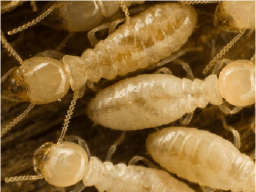
Subterranean termites are wood-feeding insects that live in damp soil and may quietly work their way into a home’s structure, feeding on structural wood around the clock from the inside out without breaking the surface. Workers are small, soft-bodied, blind, and cream-colored, while reproductive swarmers are darker with four equal-length wings.
To stay protected from dry conditions, these termites build pencil-thick mud tubes from soil and other materials, creating a covered path from the ground to the wood inside a home. Termite damage may often not be covered by standard homeowners insurance policies, so early detection and professional termite pest control in Houston can help limit costly repairs.
Here’s what to know:
- Primary attractants: Wood-to-ground contact, high moisture levels in soil near foundations, rotting stumps, damp landscaping mulch, leaking outdoor spigots, and clogged gutters overflowing near walls.
- Where they enter or gather: Underground soil networks around foundations, slab expansion joints, cracks in concrete, space behind brick veneer walls, bath traps, and interior wall studs.
- Signs of activity: Mud tubes crawling up exterior foundation walls or indoor baseboards, discarded translucent swarmer wings near windowsills after spring rains, hollow-sounding wood, blistered or bubbling drywall, and small pinhole gaps in wallpaper.
- Prevention tip: Keep soil, mulch, and other landscaping materials from covering areas where you need to inspect the foundation for signs of termite activity.
6. Rats & Mice
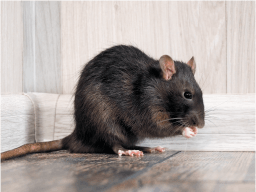
Greater Houston’s mature oak and pecan trees may give roof rats an easy route onto roofs, soffits, and fascia. Norway rats tend to stay closer to the ground and may burrow near foundations, while house mice may fit through even smaller openings and may settle inside insulated wall cavities.
Houston’s mild winters allow rodents to remain active and reproduce throughout much of the year, so their populations may not decline as sharply during the colder months. Here’s what to know:
- Primary attractants: Exposed food crumbs, unsealed pantry goods, pet food left out overnight, fallen fruit from yard trees, birdseed, open trash cans, standing water, and warm, sheltered nesting areas.
- Where they enter or gather: Attic spaces, roofline soffit gaps, unsealed roof ridge vents, wall cavities behind major appliances, and utility pipe wall penetrations.
- Signs of activity: Spindle-shaped dark droppings along wall baseboards, gnaw marks on wood trim or electrical wiring, nightly scratching noises coming from ceiling voids, and dark, greasy marks along walls or other areas they frequently travel.
- Prevention tip: Inspect your home’s exterior for potential entry points and keep food, pet food, trash, and birdseed properly contained. If rodents are entering through areas involving wiring, walls, roofs, or other hard-to-access spaces, consider contacting a professional.
7. Wasps
Houston’s extended warm season allows paper wasps and yellowjackets to remain active around homes for much of the year. Mud daubers may also be found around structures, but unlike these social wasps, they are generally solitary and build individual mud nests.
The region’s dense pine, oak, and lush residential landscaping also offer abundant wood fiber, which queens scrape and mix with saliva to manufacture paper nesting pulp. While wasps contribute to local ecosystems by preying on agricultural and garden pests, colonies constructed near doorways, patios, roof eaves, or play areas may pose sting risks when disturbed.
Attempting to remove an active nest can be hazardous, so if you’re dealing with high wasp activity or hard-to-reach nests, contact a professional stinging pest control in Houston.
Here’s what to know:
- Primary attractants: Exposed sugary foods, sweet drinks, open trash cans, pet food, dripping outdoor spigots, and an abundance of garden insects.
- Where they enter or gather: Beneath roof eaves, porch overhangs, window frames, attic soffits, fence rails, and inside wall voids.
- Signs of activity: Visible umbrella-shaped paper nests, mud nests built by mud daubers in sheltered areas, or frequent adult wasps flying back and forth to a specific nest location.
- Prevention tip: Seal gaps around roof soffits and wall penetrations, keep outdoor trash bins tightly covered, and clean up food spills promptly during outdoor gatherings.
When Should You Call Professional Pest Control in Houston, Texas?
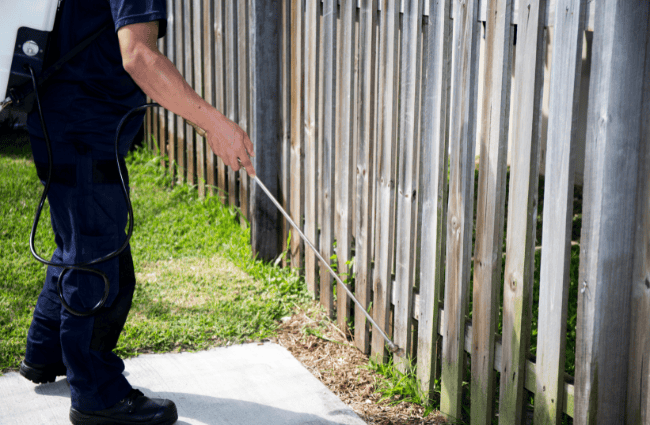
Most common pests in Houston, Texas, require specialized equipment that off-the-shelf sprays cannot replace. DIY treatments may not reach areas where pests are hiding, particularly when activity is occurring inside walls, appliances, or other hard-to-access spaces.
Reaching out to qualified Houston pest services, like Pest Control Experts, can help you identify potential sources of recurring pest activity and choose a targeted solution for your home. They focus on pest management services and are committed to applying products in accordance with applicable Environmental Protection Agency (EPA) requirements.
The company is also a member of the Professional Pest Management Alliance (PPMA).
Frequently Asked Questions About Common Pests in Houston, Texas
Looking for more information about common pests in Houston, Texas? Check out answers to some of the questions homeowners ask most often:
A: Distinguishing between reproductive termite swarmers and carpenter ant alates comes down to three key anatomical features. Termites feature a uniform, broad waist with no midsection pinch, straight antennae resembling strings of small beads, and four translucent wings that are completely equal in length and twice as long as their bodies.
Flying ants present a distinctly pinched waistline, bent or “elbowed” antennae, and two pairs of wings where the front pair is noticeably larger than the hind pair. In Greater Houston, warm spring rains frequently trigger both species to swarm simultaneously around window sills and porch lights, leading to frequent misidentifications.
A: Some homeowners choose recurring pest control in Houston every few months so that seasonal shifts, such as spring termite swarms, summer mosquito spikes, or autumn rodent invasions, are identified and intercepted early.
For subterranean termites, homeowners may also consider periodic inspections, particularly when there is a history of termite activity or conditions that may attract termites.
A: Female mosquitoes use cues such as carbon dioxide, body heat, and odors to locate people. Exercise and other factors that increase breathing, body heat, or perspiration may make some people more noticeable to mosquitoes.
Mosquitoes may also rely on subtle chemical signatures in sweat, such as lactic acid, uric acid, and ammonia, as well as specific skin microbiota profiles. Factors such as Type O blood, higher body temperatures, and dark clothing that contrasts sharply with the background further increase an individual’s visibility and appeal to foraging mosquitoes.
Get Professional Help for Common Pests in Houston, Texas!
Dealing with uninvited critters is simply a reality of living in Houston, Texas. Managing pest activity around your home is an ongoing effort that can support everyday comfort and peace of mind. But when it persists or becomes too much to handle, turning to experienced pest control in Houston, Texas, can help you identify and explore appropriate treatment options.
Pest Control Experts help local families maintain comfortable living spaces one home at a time, connecting you with local Houston pest services like Terminix and Aptive, who understand local pest challenges. Contact Pest Control Experts for a free quote and learn more about your pest control options today.