
Pavement ants are small brown or black ants that nest under sidewalks, driveways, patios, and foundations, often appearing in kitchens and bathrooms in search of food and moisture. They are persistent, widespread, and more capable than many homeowners expect. Learning a few key facts about their biology, behavior, and risks helps property owners recognize problems early and understand why professional control is often needed.
What are pavement ants?
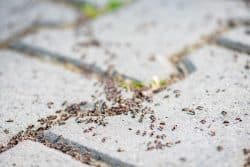
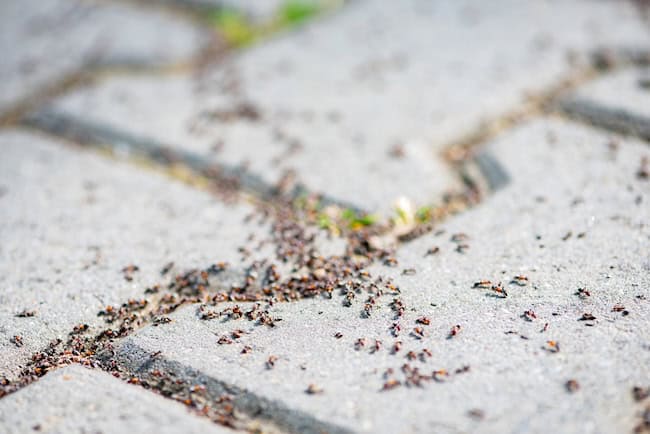
Pavement ants (Tetramorium immigrans) are small ants introduced to North America from Europe, known for nesting in soil beneath pavement, stones, and other flat surfaces around homes. They get their name from the way colonies build nests in the cracks and gaps of sidewalks, driveways, and patios. Their colonies are usually located outdoors, with mounds of soil or small openings appearing along pavement seams and edges.
Pavement ants forage widely for grease, sweets, and proteins, including other insects. Their trails often lead from outdoor nests into kitchens, pantries, and bathrooms, where they search for food and water. Because they move between outdoor and indoor areas so readily, they are a common nuisance for homeowners across much of the United States.
What do pavement ants look like?
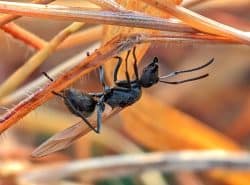
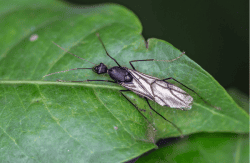
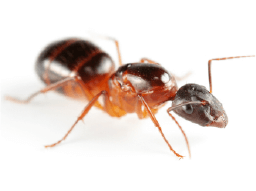
Pavement ants are about 1/10 to 1/8 inch long, with a dark brown to nearly black body, lighter legs and antennae, and parallel grooves running along the top of the head and thorax. Workers have a two-segmented waist with small spines on the back of the thorax, which helps distinguish them from many other small house ants. Their bodies appear slightly shiny, and they are most often identified by their trails and nests rather than individual size.
Pavement ants can vary in color, sometimes appearing lighter or darker depending on age and species variation. Because they are small, a hand lens can help confirm identification, especially when comparing them with similar-looking odorous house ants or other tiny species.
Are pavement ants dangerous?
Pavement ants are not considered medically dangerous, but they can bite and sting in rare cases, and they may spread bacteria when they contaminate food and surfaces. Most people never notice contact with them. Their stings are weak, and reactions are usually limited to mild local irritation. Anyone with an unusual or severe reaction should seek medical care.
The more common concern is contamination. Pavement ants travel through garbage, pet waste, and outdoor debris before reaching food preparation areas. Their presence on counters, cabinets, and pantry shelves can leave bacteria behind, making consistent cleaning and food storage important for household hygiene.
Facts about pavement ants
Pavement ants have several surprising traits that make them a persistent household pest. The following facts explain why homeowners often struggle to get rid of them.
Fact #1: Pavement ants are some of the most difficult ants to get rid of
Pavement ants are notoriously hard to eliminate because colonies have many nests, workers budget their foraging across multiple locations, and they often rebuild after partial treatments. Killing workers that appear indoors rarely removes the colony, since the queen and brood remain hidden in outdoor nests. Surface sprays may scatter colonies without eliminating them, which is why targeted baiting and professional treatment usually work better than repeated DIY spraying.
Fact #2: Pavement ants build complex nests
Pavement ant colonies often include multiple connected nests under pavement, with chambers, tunnels, and galleries spreading through soil beneath sidewalks and patios. These nests are sometimes linked by underground passages, allowing workers to move quickly between locations. Their extensive nest networks make it hard to locate the main colony, and disturbing one section may cause workers to relocate rather than leave the property.
Fact #3: Pavement ants are able to bite and sting (though they do so rarely)
Pavement ants have both mandibles for biting and a small stinger, but they use these defenses only when disturbed or trapped against skin. Their sting is weak and typically causes only minor irritation. Bites and stings are uncommon, and most people encounter pavement ants without any painful contact.
Fact #4: Pavement ant queens live for a long time
Pavement ant queens can live for several years, allowing colonies to remain productive and continue producing workers and reproductive ants over long periods. A long-lived queen means that a colony can persist and expand for years if it is not fully eliminated. This longevity is one reason why colonies can return after surface treatments.
Fact #5: Pavement ants have large colonies
Pavement ant colonies can contain thousands of workers, with some colonies growing large enough to support frequent foraging trips across yards and into homes. Large colony size means more workers searching for food at any time, which increases the chance that ants will find and enter indoor spaces. Controlling a big colony requires thorough and sustained treatment.
Fact #6: Pavement ants are widespread
Pavement ants are found across much of the United States, especially in urban and suburban areas where pavement, buildings, and landscaped yards provide nesting sites. Their introduction from Europe allowed them to spread widely, and they now thrive in many climates. Their adaptability to human environments makes them one of the most common ant pests in residential areas.
Fact #7: Pavement ants can cause structural damage to concrete
Pavement ants can damage concrete and masonry by excavating soil beneath slabs and tunneling through cracks, which may weaken surfaces over time. Their nest activity can loosen soil under patios and walkways, causing pavers and slabs to shift or crack. While this damage is usually gradual, repeated excavation can create uneven surfaces that require repair.
Fact #8: Pavement ants can contaminate food
Pavement ants can contaminate food by walking over sweets, meats, and other items after traveling through garbage, pet waste, and outdoor debris. Bacteria carried on their bodies can transfer to food surfaces, creating potential health risks. Sealing food, cleaning counters, and keeping trash containers closed help limit this contamination.
Fact #9: Pavement ants thrive in a number of settings
Pavement ants thrive in a variety of environments, including sidewalks, driveways, lawns, building foundations, wall voids, and even indoor spaces with moisture and food. Their flexibility allows them to nest in many locations around a property. This adaptability is one reason why pavement ants can be difficult to fully control without identifying and treating all active nest sites.
When to call a professional
Discovering one pavement ant doesn’t necessarily mean an infestation. But repeated ant trails along sidewalks, soil mounds at pavement seams, or ants returning after cleaning suggest an established colony requiring professional assessment. This is when to call a local pest expert.
DIY methods like sealing cracks, storing food, and wiping spills reduce attractants. But they often miss nests hidden beneath sidewalks, driveways, and patios. They don’t address the root causes drawing these ants to your property, such as food sources, moisture, and gaps around foundations. Cleaning provides temporary relief without fixing underlying problems. This allows colonies to keep foraging and returning indoors.
A professional pest control service, like Aptive or Terminix, can help confirm that pavement ants are the problem. They locate nests beneath pavement and in soil along foundations. They evaluate gaps around foundations, patios, and door thresholds that give ants indoor access. They assess food and moisture sources supporting the colony. They provide comprehensive treatment combining targeted baiting, nest treatment, entry point sealing, and ongoing monitoring to resolve the problem and prevent reinfestation.