
Mosquitoes are blood-feeding insects causing itchy bites and transmitting serious diseases including dengue fever, Zika virus, West Nile virus, and malaria, requiring standing water for reproduction and establishing populations in yards and surrounding properties.
Understanding mosquito identification, breeding requirements, and disease transmission helps homeowners implement effective prevention strategies eliminating breeding sites, applying protective treatments, and recognizing disease transmission risks requiring professional intervention managing both breeding populations and outdoor infestations threatening household health and comfort.
What do mosquitoes look like?
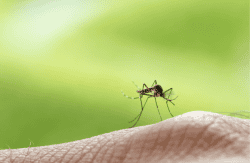
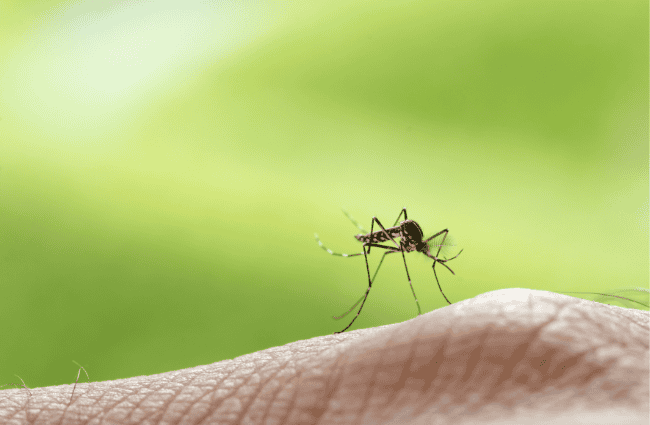
Mosquitoes are small flying insects measuring 1/4 to 3/8 inch in length, characterized by slender bodies, long needle-like proboscis (feeding tube) extending forward from heads, long delicate legs, and wings with fringe scales along edges.
Common pest species include Asian tiger mosquitoes (Aedes albopictus) with distinctive white stripes on bodies and legs, southern house mosquitoes (Culex quinquefasciatus) appearing brown without distinctive markings, and yellow fever mosquitoes (Aedes aegypti) with white markings and silvery thorax. Males possess bushier antennae than females and don’t feed on blood, instead consuming nectar.
Only female mosquitoes bite—they require blood meals for egg production, detecting hosts through carbon dioxide, body heat, and chemical signals. Males feed on nectar and plant juices, serving as pollinators and playing no role in disease transmission. The sexual dimorphism is important for understanding mosquito biology and control strategies targeting primarily female populations.
Mosquitoes possess two wings (unlike most insects with four) enabling rapid flight and agile maneuverability. Their small size, delicate appearance, and ability to enter small openings make them excellent invaders of structures. Unlike robust cockroaches or rodents, mosquitoes avoid structures during daylight, remaining hidden in vegetation, dark corners, and protected areas emerging at dusk and throughout night for feeding and breeding activities.
The lifecycle of a mosquito
Mosquitoes undergo complete metamorphosis progressing through egg, larval, pupal, and adult stages, with entire development from egg to adult requiring as little as 7-10 days in optimal warm conditions, enabling multiple overlapping generations annually.
Female mosquitoes lay eggs on water surfaces or in depressions that will fill with water, with eggs hatching within hours to days. Eggs are extremely resistant to desiccation, surviving months to years in dry conditions, hatching immediately when water becomes available.
Larvae are aquatic, developing through four instars over 5-14 days depending on water temperature and food availability. Larvae breathe at water surfaces, feeding on organic debris and microorganisms. They’re active swimmers moving through water with distinctive wriggling motions. Pupae are also aquatic, resembling comma-shaped structures rather than typical pupae, remaining in water while internal transformation occurs over 1-7 days.
Adult mosquitoes emerge from pupae at water surfaces, immediately becoming functional and capable of flight. Males and females mate within days, with males living 10-14 days while females live several weeks to months. Females begin seeking blood meals shortly after mating, with each blood meal enabling production of 100-300 eggs. Multiple blood meals enable multiple egg-laying cycles creating continuous reproduction.
The rapid development, ability to produce numerous eggs per female, and tolerance of diverse aquatic habitats make mosquitoes extremely successful pests. A single female laying eggs in small water accumulations can produce hundreds of offspring within weeks. The short developmental period and large population sizes make mosquito control dependent primarily on preventing breeding through water elimination rather than targeting adults.
Where are you most likely to find mosquitoes?
Mosquitoes concentrate near standing water sources including flower pots, birdbaths, clogged gutters, containers, ditches, marshes, ponds, and any location holding water for sufficient time enabling larval development.
Properties with poor drainage, accumulated containers, or unattended water features support robust mosquito breeding populations. Urban and suburban areas with human-created breeding sites often support higher mosquito populations than wilderness areas lacking water accumulations.
Different species prefer different water types—some breed in clean water like birdbaths, others in polluted conditions. Some species breed in tree holes or plants holding rainwater, others in ground puddles. This diversity of breeding habitats makes comprehensive mosquito control challenging since elimination of one breeding site doesn’t prevent population establishment in alternative locations.
Mosquito activity patterns concentrate around dawn and dusk during warm months, though some species remain active throughout daylight. Indoor mosquitoes prefer dark areas including closets, under furniture, and in wall voids where they hide during daylight. Outdoor mosquitoes rest in dense vegetation, beneath leaves, in mulch, and anywhere providing shade and protection from drying winds.
Properties near wetlands, retention ponds, natural water bodies, or areas with poor drainage experience chronic mosquito populations. Urban properties in developed areas support mosquitoes through numerous small breeding sites including containers and clogged gutters often overlooked during prevention efforts. Climate and season strongly affect mosquito populations with warm, humid weather maximizing reproduction and population growth.
Are mosquitoes dangerous?
Mosquitoes are extremely dangerous disease vectors transmitting serious and potentially fatal illnesses including West Nile virus, Zika virus, dengue fever, chikungunya, and malaria, making them among the most medically significant arthropods globally.
West Nile virus causes serious neuroinvasive disease with permanent neurological complications in severe cases. Zika virus causes birth defects when acquired during pregnancy, including microcephaly and developmental disorders.
Dengue fever affects over 400 million people annually worldwide, causing severe fever, muscle and bone pain, and rash, with some cases progressing to dengue hemorrhagic fever with high mortality. Chikungunya causes debilitating joint pain lasting months to years. Malaria, while less common in the United States, remains the world’s most significant mosquito-transmitted disease killing millions annually.
Beyond disease transmission, mosquito bites cause immediate itching, swelling, and discomfort affecting quality of life and outdoor recreation. Secondary infections from scratching intensify skin damage. Hypersensitivity reactions in some individuals produce severe swelling and allergic responses. The cumulative impact of numerous bites reduces quality of life particularly in summer months when outdoor activities are peak.
The combination of disease transmission, discomfort from bites, allergic responses, and prevention requirements makes mosquitoes serious public health threats warranting comprehensive management. Unlike nuisance pests causing minor irritation, mosquitoes represent immediate health emergencies requiring vigilant prevention and professional management protecting public health.
Signs you might have a mosquito infestation
Multiple indicators help identify mosquito problems before disease transmission occurs:
- Increasing bite frequency: Growing numbers of itchy welts and bites particularly during dawn/dusk indicates increasing mosquito populations.
- Visible mosquitoes indoors: Finding mosquitoes inside structures during the day indicates successful indoor invasion and breeding or resting populations.
- Standing water near structures: Flower pots, clogged gutters, birdbaths, and containers holding water indicate mosquito breeding sites.
- Mosquitoes around lights: Clustering of mosquitoes around outdoor lighting particularly at dusk indicates nearby breeding or resting populations.
- Dense vegetation mosquito activity: Swarms or clusters of mosquitoes in landscaping and dense vegetation during warm evenings indicate nearby populations.
- Water features without circulation: Neglected pools, fountains, and water features supporting algae and organic material indicate ideal breeding conditions.
- Recent rainfall puddling: Standing water in yards and low areas following rain provides temporary breeding sites supporting rapid population growth.
How to prevent a mosquito infestation
Preventing mosquito breeding and reducing populations requires comprehensive water management:
- Eliminate standing water: Drain flower pot saucers, birdbaths, clogged gutters, and containers preventing water accumulation supporting breeding.
- Empty containers regularly: Buckets, plant saucers, kiddie pools, and other containers collecting water must be emptied preventing larval development.
- Improve drainage: Grade soil away from structures, fill low areas accumulating water, and maintain proper drainage preventing puddles supporting breeding.
- Maintain water circulation: Keep fountains, pools, and decorative water features circulating preventing stagnation and mosquito breeding.
- Apply mosquito dunks: Use mosquito larval control products in water features and containers enabling breeding prevention without draining water.
- Trim vegetation: Reduce dense overgrowth where mosquitoes rest during daylight, increasing air circulation and reducing resting sites.
How to get rid of a mosquito infestation
Eliminating mosquito infestations requires combined approaches targeting breeding sites and adult populations:
- Conduct complete water audit: Systematically identify all standing water sources including hidden or overlooked accumulations, draining or treating each location.
- Apply larval control products: Use mosquito dunks, oils, or granules in water features unable to be drained, killing larvae before emergence.
- Use barrier treatments: Apply residual insecticides to vegetation and resting areas killing adult mosquitoes before blood-feeding.
- Deploy mosquito traps: Install CO2-based or heat-activated traps attracting and capturing adult mosquitoes, reducing populations without pesticides.
- Contact professional pest control: Seek expert assistance for severe infestations, comprehensive yard treatments, or mosquito-borne disease concerns requiring professional management and monitoring.
Conclusion
When dealing with mosquito infestations throughout your property and need expert assessment confirming infestation severity and appropriate treatment pricing, contact Aptive today for a free quote and comprehensive evaluation.
Our pest control experts will assess the extent of mosquito infestation indicated by standing water sources, breeding sites, bite frequency, and visible populations near outdoor lighting and vegetation confirming active reproduction and disease transmission risks.
FAQs about mosquitoes
Here are some commonly-asked questions about mosquitoes from homeowners.
A: Apply EPA-registered insect repellents containing DEET, picaridin, or IR3535 to exposed skin, wear long sleeves and pants in light colors, use permethrin on clothing, avoid dawn and dusk outdoor activity when mosquitoes are most active, and stay indoors in air-conditioned spaces during peak biting hours. Repellent effectiveness increases with higher active ingredient concentrations and regular reapplication following label directions.
A: Mosquitoes are repelled by DEET, picaridin, and IR3535 in commercial repellents, along with certain essential oils including eucalyptus, citronella, and lavender with varying effectiveness. However, commercial repellents are far more reliable than essential oils for preventing bites. Picaridin is increasingly popular as a DEET alternative offering similar protection with less greasy feel. Effectiveness varies among individuals with some people requiring stronger repellents than others.
A: Florida has the most severe mosquito populations in the United States due to year-round warm climate, abundant wetlands, high humidity, and countless water accumulations supporting continuous breeding. Louisiana, Georgia, Texas, and other southeastern states experience substantial populations, but Florida’s subtropical climate creates ideal conditions supporting the largest mosquito populations year-round. Urban and coastal areas experience particularly high populations compared to inland regions.