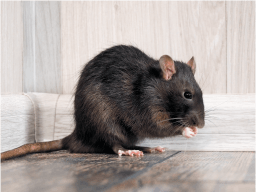


It plays out in thousands of homes every week: a scratching sound inside the drywall, a handful of seed-shaped droppings in the back of the pantry, and the sinking realization that you have rodents. For most homeowners, the next move is a frantic trip to the hardware store for traps and bait.
But rodenticide isn’t like picking up a can of bug spray. It’s one of the most misunderstood, frequently misused, and potentially hazardous products in residential pest management. Before you place a single block of bait, you need to understand how these chemicals interact with your home, your family, and the local wildlife—because taking matters into your own hands without a plan can turn a minor nuisance into an expensive, dangerous mess.
What Is Rodenticide?
A rodenticide is any pesticide specifically formulated to kill rodents like mice and rats. The public calls it “rat poison” or “mouse poison,” but rodenticide is the proper regulatory and scientific term.
One critical misconception up front: rodenticide is not a repellent. It doesn’t scare mice away or keep them from crossing your property line. These products use highly palatable food matrices—grains, seeds, fats—to entice a rodent into eating a lethal dose of a hidden toxicant. They come in hard bait blocks, soft packets, and liquid formulations, though how consumers can purchase and use them has changed significantly due to EPA safety mandates.
Federal regulations now require that rodenticides be placed inside EPA-approved, tamper-resistant bait stations unless applied in areas completely inaccessible to children and wildlife. Realistically, there’s no good reason not to use a station every time.
How Does Rodenticide Work?
Rodenticides fall into two broad categories, and the distinction matters because it affects everything from how quickly the product works to how much risk it poses to non-target animals.
Anticoagulant Rodenticides
First-generation anticoagulants (warfarin, chlorophacinone) are the older formulations, developed before the 1970s. They require a rodent to feed continuously over multiple days to accumulate a lethal dose—and after decades of use, many rodent populations developed resistance and could eat the bait without dying.
Second-generation anticoagulants (brodifacoum, bromadiolone) were engineered in response to that resistance. They’re far more potent, allowing a mouse or rat to consume a fatal dose in a single feeding. Once ingested, the rodent slowly succumbs to internal bleeding over three to seven days. The delayed death is intentional—because the animal doesn’t connect the sickness to the food source, it doesn’t develop “bait shyness,” and other colony members keep feeding.
Non-Anticoagulant Toxicants
Heavy regulatory restrictions on second-generation anticoagulants—driven by wildlife poisoning concerns—have shifted the residential consumer market toward non-anticoagulant options, most notably bromethalin and cholecalciferol. These work through different mechanisms (neurotoxicity and hypercalcemia, respectively) and carry their own risk profiles.
Rodenticide Safety: Risks to Kids, Pets, and Wildlife
The most important question any homeowner should ask before using chemical bait is simple: can this harm my pets, my children, or non-target wildlife? The answer, bluntly, is yes. Any chemical engineered to shut down the circulatory, neurological, or cellular systems of a small mammal can do the same to a dog, a cat, or a toddler.
Primary Toxicity
Primary toxicity occurs when a non-target animal directly eats the bait. This is why tamper-resistant stations exist—professional-grade, lockable stations are built to withstand a dog’s jaws and a child’s fingers. The openings are sized to exclude larger animals, and internal rods hold the bait securely so it can’t be shaken loose.
The catastrophic mistake homeowners make is pulling bait blocks out of the station and tossing them loose into an attic, a crawlspace, or behind the refrigerator. Mice don’t always eat bait where you place it—they hoard food, carrying toxic blocks into living spaces where a puppy or a crawling baby can easily find them.
Secondary Toxicity
This is the hidden threat that catches people off guard. Secondary toxicity occurs when a pet or predator catches and eats a rodent that has consumed poison but hasn’t died yet.
Because anticoagulant baits take days to kill, a poisoned rodent becomes sluggish, disoriented, and easy prey for a house cat, a dog, or a wild predator like an owl, hawk, or fox. The predator ingests the poison secondhand. Over time, these chemicals bioaccumulate in local wildlife populations, causing ecological damage well beyond your property line.
Emergency Protocol
If you suspect your pet has ingested rodent bait, treat it as an immediate medical emergency—do not wait for symptoms. Grab the product packaging so the veterinarian knows the exact active ingredient, and call your vet or the ASPCA Animal Poison Control Center immediately. Some active ingredients have antidotes. Others do not.
The Indoor Problem: Dead Rodents in Your Walls
One of the most persistent myths in the hardware store aisle is that modern rodenticides “dry out” the animal so it doesn’t smell when it dies. Let’s put this to rest: no chemical ingredient in any consumer or professional rodenticide prevents a dead mammal from decomposing normally. That claim is pure marketing fiction.
When a mouse eats a lethal dose indoors, it doesn’t politely march outside to die in the yard. As the chemical takes effect, the animal feels weak and vulnerable. Its instinct is to retreat into the safest, darkest, most inaccessible space it can find—a wall void, an insulation cavity, a wiring chase behind a kitchen appliance.
When it dies there, you’re left with a decomposing carcass you can’t reach without cutting drywall. That dead tissue becomes a breeding ground for secondary insect pests—blowflies, flesh flies, carpet beetles—creating a new infestation that’s often harder to resolve than the original rodent problem. This is exactly why pest management professionals recommend extreme caution with toxic baits inside residential living spaces.
Trapping vs. Baiting: Which Approach Is Right?
There’s no universal answer—each situation is different, and effective rodent control rarely relies on a single tool. Traps and baits are often used together. But before either one enters the picture, step one is always sanitation and exclusion.
Commensal rodents—roof rats, Norway rats, and house mice—will eat nearly anything you leave accessible. Outdoor garbage cans, greasy grills, fruit trees, compost piles — all of it. You’ll never eliminate every food source, but limiting access and availability pushes rodents to look elsewhere for an easier meal.
Then seal the building envelope. A mouse can squeeze through a gap the size of a dime; a rat needs only a quarter-sized hole. Use copper mesh, hardware cloth, and structural silicone to close weep holes, utility penetrations, and garage door thresholds. Add door sweeps to every ground-floor exterior door. This solves the root cause permanently.
When you do deploy bait stations, placement matters more than product. Put them where you’re finding droppings—that’s the runway. Rodents don’t like open exposure; they travel along walls and edges. Place stations flush against a wall, under cover, and close to confirmed activity. Outdoors, position them against the foundation or other structures. And always read and follow the product label—it protects you and keeps non-target animals safe.
| Control Method | Best For | Advantages | Limitations |
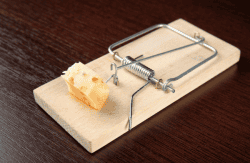
| Snap traps | Small problems, ongoing monitoring | Immediate confirmation, no poison | Requires correct placement and carcass removal |
| Live traps | Specific situations where permitted | No poison, no carcass | Stressful for animals; relocation may be restricted by local law |
| Rodenticide | Confirmed infestations, heavy rodent pressure | Reduces large populations | Poisoning risk; rodents may die in walls; non-target hazards |
| Professional control | Recurring, large, or unclear infestations | Full inspection, exclusion plan, safer placement | Higher upfront cost |
When to Call a Professional
Put down the retail products and reach out for professional rodent control if any of the following apply.
Daytime sightings. Rodents are nocturnal. A mouse or rat crossing your living room floor in broad daylight means the hidden population is so dense that weaker individuals are being forced out of prime nesting spots to forage. That’s not one mouse—that’s a colony under pressure.
Sounds inside the structure. Active scratching, scurrying, or chewing inside walls or ceilings at night means rodents have established nesting zones inside the building envelope—not just passing through.
Unresolved trapping. If you’ve had snap traps set for more than a week and you’re still finding fresh droppings without catching anything, you’re dealing with a bait-shy or trap-resistant population that requires specialized techniques.
A licensed pest control expert doesn’t just throw products at the problem. They will conduct a full inspection to find hidden entry points, commercial-grade trapping systems that keep carcasses accessible, and targeted external baiting programs using tamper-resistant stations that protect local wildlife and household pets. If the problem has moved past the quick-fix stage, professional pest control is the safer, more effective, and often cheaper long-term investment.